Home / Blog / Costs & Permits

Septic System Costs in East Texas: What Actually Drives the Price

September 2, 2026 · Damon Malnar · Costs & Permits

“How much does a septic system cost?” is usually the first question people ask, and the honest answer is “it depends”, which is not very useful on its own. The price of a septic system in East Texas can vary by thousands of dollars between two properties on the same road, and quotes for the same property can vary between contractors because they are not quoting the same thing.

This guide gives you realistic 2026 price ranges for Texas, then explains what actually drives the number: the type of system your soil allows, the size of the home, the site itself, and the permitting and professional work that comes before a single shovel goes in the ground. It also covers what a system costs to run each year, how to compare quotes fairly, and how to keep costs down without cutting corners.

Typical septic system costs in Texas (2026)

These ranges come from published Texas cost guides in 2026. They are useful for budgeting, but your property’s actual cost can only be set after a site evaluation.

ItemTypical Texas rangeNotes
New conventional systemAbout $6,300 to $10,000Tank plus drain field, where the soil allows it
New aerobic systemAbout $10,000 to $20,000Aerobic unit, disinfection, spray or drip dispersal
Site evaluation, design and permitOften $1,500 to $5,000 combinedVaries by site, designer and permitting authority
Routine pump-outAbout $250 to $400More for large tanks or hard-to-reach lids
Aerobic maintenance contractAbout $300 to $500 a yearRequired for aerobic systems in Texas
Aerobic electricityAbout $100 to $300 a yearAir pump and effluent pump

The spread is wide because the biggest cost factors are specific to each property. The rest of this guide explains them.

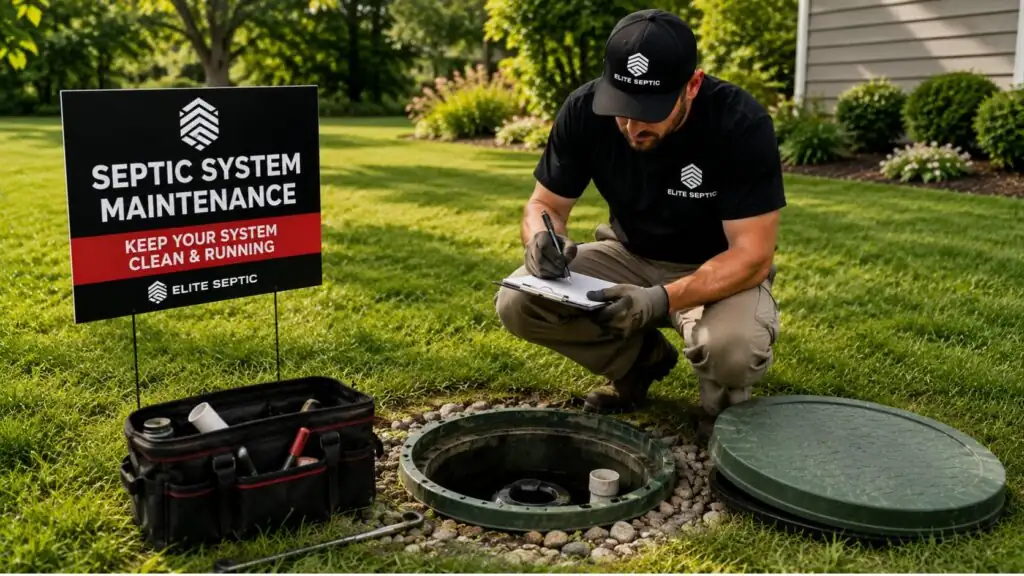
Technician reviewing septic system installation costs in East Texas
The site evaluation is where a realistic price starts.

Factor 1: Your soil decides the type of system

This is the biggest single driver of cost, and it is largely out of your hands. In Texas, a licensed site evaluator examines the soil before a system is designed. Where the soil drains at a moderate rate and there is enough depth above groundwater and rock, a conventional system is usually allowed. Where the site has heavy clay, a seasonal water table within about two feet of the trench bottom, shallow rock or not enough room, a conventional drain field generally is not permitted, and an aerobic system is needed.

Much of East Texas falls into the second group. Clay subsoils and wet winters are common across Angelina, Polk, Houston and the surrounding counties, and small lake lots around Sam Rayburn, Toledo Bend and Lake Livingston add setback limits on top. That is why so many new systems here are aerobic, and why the cost range for this region leans higher. Our comparison of aerobic vs. conventional systems explains the differences.

Factor 2: The size of the home

Texas sizes systems from the home’s expected daily wastewater flow, which is set by the number of bedrooms and the living area. A three-bedroom home under 2,500 square feet has a design flow of 240 gallons per day with water-saving fixtures; a five-bedroom home under 4,500 square feet has 360. More flow means a larger tank or aerobic unit and, more importantly, a larger drain field or dispersal area. Our Texas sizing guide shows the full table.

Factor 3: Drain field size and soil class

For a conventional system, the drain field is often the largest part of the cost, and its size depends heavily on the soil. Texas rules divide the design flow by the soil’s long-term application rate:

Soil classApplication rateAbsorptive area for 240 gal/day
Ib (sandy loam)0.38 gal/sq ft/dayAbout 630 sq ft
II (loam)0.25 gal/sq ft/dayAbout 960 sq ft
III (clay loam)0.20 gal/sq ft/dayAbout 1,200 sq ft
IV (clay)0.10 gal/sq ft/dayAbout 2,400 sq ft, and usually not allowed for standard trenches

Twice the area means roughly twice the excavation, material and labor. On the tightest soils, an aerobic system with spray or drip dispersal can end up being the more practical option even before the rules require it.

Factor 4: The site itself

Two identical houses can have very different septic costs because of the ground around them:

  • Access. Equipment has to reach the tank and field locations. Tight gates, soft ground, steep drives and heavy tree cover all add time.
  • Clearing. East Texas lots often need trees and stumps removed from the field area.
  • Distance. A long run from the house to the tank, or from the tank to the only suitable field area, adds pipe and trenching, and sometimes a pump.
  • Slope and drainage. Steep or low-lying areas may need special designs, pumps or surface drainage controls.
  • Setbacks. State rules keep systems away from wells, lakes, creeks and property lines. On a small lot, fitting everything in can dictate a more expensive design.

Factor 5: Permits and professional fees

Before installation, most Texas systems need a site evaluation by a licensed site evaluator, a design by a registered sanitarian or professional engineer, and a permit from the local authorized agent. In Angelina County, that is the Angelina & Neches River Authority, which publishes its fee schedule. Aerobic systems also need notarized affidavits, one of them recorded with the county clerk. These costs are not optional, and a quote that leaves them out is not a complete price. Our guide to septic permits in Angelina County walks through each step.

Factor 6: Replacement extras

Replacing an old system usually costs more than installing on a clear lot. The old tank may need to be pumped and properly abandoned or removed, the new field often has to go in a different part of the yard, and there may be driveways, fences or landscaping to work around and restore. If the existing tank is sound, it can sometimes be reused as part of the new design, which saves money. See septic system replacement for how we approach these jobs.

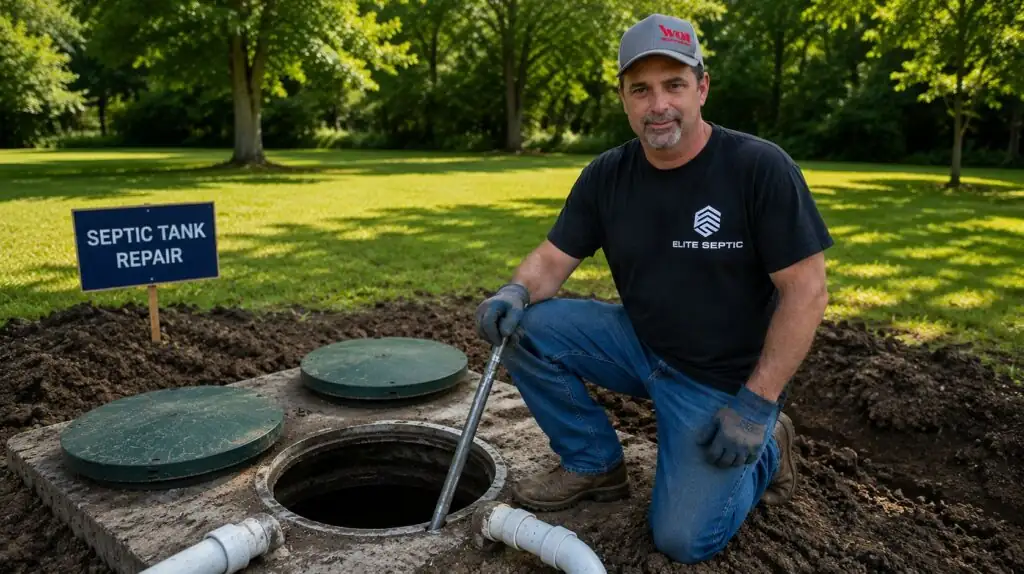
Septic system replacement excavation in East Texas
Replacement jobs often cost more than new installs because of removal and restoration work.

Three example projects

Numbers mean more with a property attached. These three scenarios show how the factors above combine. They are illustrations for budgeting, not quotes; every site is priced after its own evaluation.

A three-bedroom home on well-drained soil

A new 1,800-square-foot home on an open, level lot with loamy soil and no water table problems is the simplest case. The site evaluation allows a conventional system, the tank can be a standard 1,000-gallon concrete tank, and the drain field fits comfortably with room to spare. With easy access and little clearing, this project sits toward the lower end of the conventional range, plus the evaluation, design and permit.

The same house on East Texas clay

Move that house to a lot with heavy clay subsoil and a high winter water table, and the evaluation rules out a standard drain field. The design switches to an aerobic unit rated at 360 gallons per day with spray dispersal. The equipment costs more, the electrical run from the house to the control panel adds cost, affidavits must be recorded, and the owner takes on a maintenance contract. The project lands in the aerobic range, and the yearly running costs rise.

Replacing a failed system on an older lake lot

A 1970s cabin near the lake has a failed drain field. The lot is small, the lake setback limits where a new field can go, and the old tank sits under a later deck. The new design needs an aerobic unit with carefully placed dispersal, the old tank has to be pumped and abandoned, and the deck and landscaping must be worked around. Jobs like this usually cost the most, because the difficulty is in the site, not the equipment.

Repair costs vs. replacement

Not every problem means a new system. Many repairs are modest: replacing a broken baffle or lid, adding risers, clearing a blocked line, replacing an effluent pump or an aerobic air pump, or fixing a timer or float. These are typically a fraction of the cost of replacement. The expensive failures are the ones in the drain field, which is why routine pumping, which keeps solids out of the field, pays for itself. Our guide on why drain fields fail explains when a field can be saved.

What a septic system costs to run each year

Yearly costConventionalAerobic
Maintenance contractOptionalAbout $300 to $500 (required)
ElectricityNone for gravity systemsAbout $100 to $300
Chlorine tabletsNoneRegular refills
Pumping (averaged per year)Small: one pump-out every 3 to 5 yearsVaries; set by the maintenance provider
Repairs over timeFew moving partsPumps and aerators wear out eventually

Texas cost guides estimate that, over ten years, an aerobic system can cost several thousand dollars more to own than a conventional one. Where the soil allows a conventional system, that is a real saving. Where it does not, it is simply the cost of a legal, working system on that land.

Why quotes vary so much, and how to compare them

When two quotes for the same property are thousands of dollars apart, the cause is usually scope, not just price. Before comparing, check that each quote answers the same questions:

  • Does it include the site evaluation, design and permit fees, or are those extra?
  • What exactly is the tank or unit: size, material and brand?
  • How large is the drain field or dispersal area, and what type is it?
  • For aerobic systems, is the electrical run from the house to the control panel included?
  • Are risers to the surface included, so the tank can be serviced without digging?
  • Is removal or abandonment of the old system included?
  • What restoration is included: backfill, grading, seeding?
  • For aerobic systems, is the initial two-year maintenance contract included?
  • What warranty comes with the work and the equipment?

A lower quote that leaves out half of these is not really cheaper. We give flat-rate prices in writing that spell out what is included.

How to keep septic costs down

  1. Get a site evaluation before buying land. Knowing whether a lot needs an aerobic system can change what you are willing to pay for it.
  2. Plan the house around the system, not the other way round. Leaving the best soil free for the drain field can avoid a more expensive design.
  3. Size for the future once. Upgrading later for an added bedroom costs far more than sizing correctly at the start.
  4. Maintain what you have. Regular pumping and inspection are the cheapest insurance against a drain field replacement. See how often to pump a septic tank.
  5. Protect the drain field. No vehicles, livestock or trees over it, and keep grease and wipes out of the drains.
  6. Act early on warning signs. A repair caught early is usually far cheaper than a failure. See our list of septic warning signs.

Frequently asked questions

To install and to run, generally yes. But on land that cannot support a conventional drain field, it is the only option, so the comparison is academic.

The installation itself often takes a few days on site. The steps before it, including the site evaluation, design and permit, usually take longer, so plan for several weeks from first call to a working system.

Policies vary. Many exclude failures caused by age, wear or lack of maintenance, but some cover sudden accidental damage. Check your policy and keep your maintenance records.

Online figures are averages. Your price reflects your soil, your site, your home’s size and everything included in the scope. Ask the contractor to explain each line so you can see where the cost comes from.

Yes, somewhat. Permit fees, local rules and inspection requirements vary by permitting authority, and travel distance affects labor. The bigger differences, though, come from soil and site conditions, which can vary as much within a county as between counties.

Want a real number for your property instead of a range? Elite Septic Service provides free estimates across Lufkin, Jasper and East Texas, with flat-rate pricing in writing once the site has been evaluated. Request a free estimate or read about septic tank installation.

Need help with your septic system?

Damon Malnar, owner and founder of Elite Septic Service in Lufkin, Texas

Written by

Damon Malnar

Owner & Founder, Elite Septic Service

10 years installing, repairing, and inspecting septic systems across Lufkin, Jasper, and the surrounding East Texas counties.

TCEQ licenses

  • Installer, Class II
  • Site Evaluator
  • Maintenance Provider

More about Damon

Need service now?

Call for fast scheduling across East Texas.

Related Articles

How Often Should You Pump a Septic Tank? An East Texas Guide

How Often Should You Pump a Septic Tank? An East Texas Guide

A practical pumping schedule by tank size and household size, the measurements that tell you it is time, and the habits that stretch the interval.
9 Warning Signs Your Septic System Is Failing (and What to Do Next)

9 Warning Signs Your Septic System Is Failing (and What to Do Next)

Slow drains, gurgling, odors, soggy ground and backups: what each warning sign means, how urgent it is, and what to do right away.
Septic Permits in Angelina County, TX: A Step-by-Step Guide

Septic Permits in Angelina County, TX: A Step-by-Step Guide

Who issues septic permits in Angelina County, every step from site evaluation to License to Operate, and what changes when a property is sold.