
Septic Repair Across East Texas
Septic Tank Repair in East Texas
Most septic problems come down to one failed part: a broken baffle, a stuck float, a cracked lid, a blocked line or a worn-out pump. Elite Septic Service finds that part, shows you what failed and why, and repairs it at a flat rate agreed before work starts, for homes, rentals and lake properties across Lufkin, Jasper and East Texas.
- Diagnosis before any part is replaced
- Pumps, floats, alarms, baffles, lids and lines
- Flat-rate pricing agreed up front

Repair Overview
Diagnose First, Then Repair
A septic system is a chain of parts: the house line, the inlet, the tank, the outlet and filter, any pump and floats, the lines to the field and the field itself. When something goes wrong, the symptom in the house rarely tells you which link failed, and replacing parts on a guess is how small repairs become expensive ones.
We start by checking the liquid level in the tank, the baffles, the pump and floats, the alarm circuit and the field, so the repair is aimed at the part that actually failed.
Repair or replace?
Most problems are repairable. Replacement only becomes the honest answer when the drainfield has stopped absorbing, the tank has failed structurally, or the system is far too small for the house. If we think a repair will not hold, we will say so and explain why. See septic system replacement for when that point is reached.
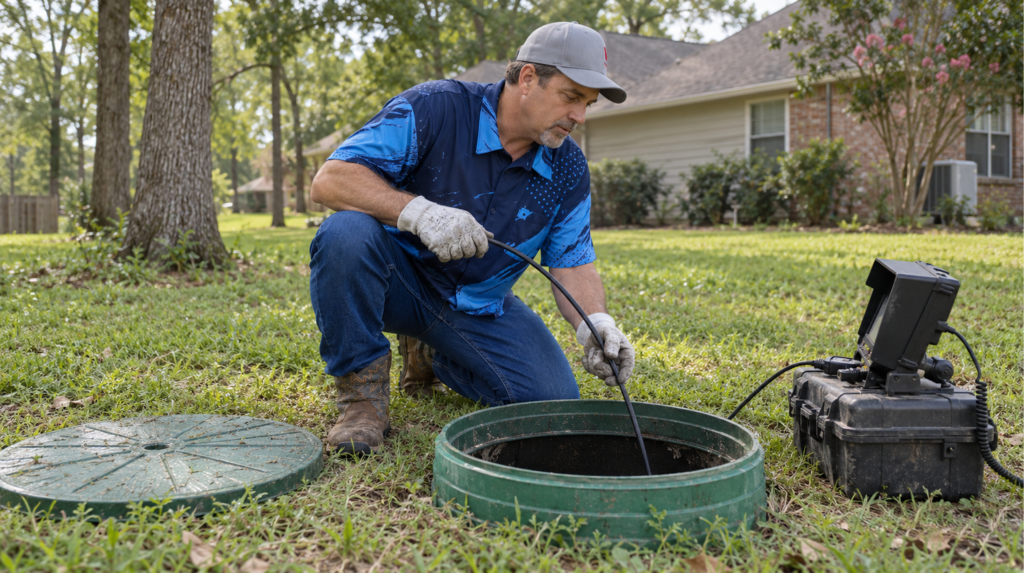
Every repair visit includes
- Tank level and baffle check
- Pump, float and alarm testing
- Line and distribution box check
- Drainfield walk-over
- A clear explanation of the fault
- A flat-rate price before work starts
What We Repair
Septic Repairs We Handle
These are the repairs we carry out most often on conventional and aerobic systems.
Baffles and Tees
Broken or missing baffles let solids escape to the field. Replacing them early protects the most expensive part of the system.
Pumps, Floats and Alarms
Effluent pumps, float switches and alarm panels on pump and aerobic systems, tested individually and replaced when they fail.
Tank Lids and Risers
Cracked or missing lids are a safety hazard. We replace lids and fit risers to grade so future service is easier.
Inlet, Outlet and House Lines
Cracked, root-damaged or separated pipe between the house, tank and field, located and repaired.
Distribution Boxes and Field Lines
Tilted or broken distribution boxes and damaged field lines that send effluent to one part of the field.
Aerobic System Components
Compressors, diffusers, chlorinators, spray heads and control panels on aerobic treatment units.
Sewage in the house or an alarm that will not stop? That is an emergency; see our 24/7 emergency septic service. Learn the early signs in 9 warning signs your septic system is failing.
Step By Step
How a Septic Repair Visit Works
A repair visit follows the same order every time, so nothing is replaced until the cause is clear.
1. Tell Us What Is Happening
Which drains are slow, whether there is an alarm, a smell or wet ground, and when the system was last serviced.
2. Locate and Open the Tank
We find the tank and lids and check the liquid level against the outlet.
3. Test Each Component
Pumps are run, floats lifted, alarms triggered and lines checked.
4. Explain and Quote
We show you the failed part and give a flat-rate price before starting.
5. Make the Repair
Common parts travel on the truck, so many repairs are finished on the first visit.
6. Test Under Real Conditions
We run water through the system to confirm the repair works before we leave.
Can a septic repair be done the same day?
Often, yes. Floats, alarms, baffles, lids and many pumps can be replaced on the first visit. Larger jobs, such as a distribution box, a section of field line or a cracked tank that has to dry before it can be sealed, may need a second visit or a short wait for parts or dry weather.

Choose Your Location
Septic Tank Repair Near You
Our two main service areas have dedicated repair pages with local detail on soils, lake properties and the failures we see most. Choose your location, or see every county we cover.
Not sure whether it is a repair or something bigger? Book a septic inspection first.
Septic Tank Repair FAQs
Common questions about septic tank repair in East Texas.
How do I know my septic system needs repair?
How much does septic tank repair cost?
Can a cracked septic tank be repaired?
What does a septic alarm mean?
Do septic repairs need a permit?
Do you repair aerobic septic systems?
Need a Septic Repair?
Tell us the address and what is happening. We will diagnose the fault and give you a flat-rate price before any work begins.
- Diagnosis first
- Flat-rate pricing
- Licensed and insured