
Video Sewer Line Inspection
Sewer Camera Inspection in Lufkin, TX
Guessing where a line is blocked means digging until you find it. A camera means knowing before the first shovel goes in. Elite Septic Service runs video inspections of sewer lines, building drains and septic lines across Lufkin, Angelina County and the surrounding East Texas counties, then shows you the footage and tells you plainly what is wrong and where.
- See the inside of the line rather than paying to guess at it
- Blockages and breaks located and marked to depth before any digging
- Footage and findings you can keep, share or hand to a contractor

Camera Inspection Overview
Why Put a Camera Down the Line First
A blocked or damaged sewer line gives you almost nothing to work with from above ground. Slow drains, a backup at the lowest fixture, a wet patch in the yard — all of it tells you something is wrong somewhere along a run of pipe you cannot see. Without a camera the options are to snake it and hope, or to start excavating on an educated guess.
A video inspection removes the guesswork. A waterproof camera on a flexible rod is fed into the line through a cleanout or an access point, and what it sees is displayed on a monitor in real time. You watch it with us. Roots coming through a joint at forty feet look exactly like roots coming through a joint at forty feet, and a locator on the camera head marks the spot on the surface so the dig, if there has to be one, is the size of a grave rather than a trench across the yard.
This is not the same as a septic inspection
The two get confused, so it is worth being clear. A septic inspection evaluates the system: the tank, the sludge and scum levels, the baffles, and the condition of the drainfield. A sewer camera inspection looks inside the pipes — the building drain, the line from the house to the tank, and the effluent lines beyond it. They answer different questions.
Plenty of jobs want both. If a septic inspection turns up a system that will not clear and a field showing no obvious problem, the camera is what tells you whether the line between them has collapsed, sagged or filled with roots. We run both, and on a property where the symptoms are ambiguous we will say which one to start with.
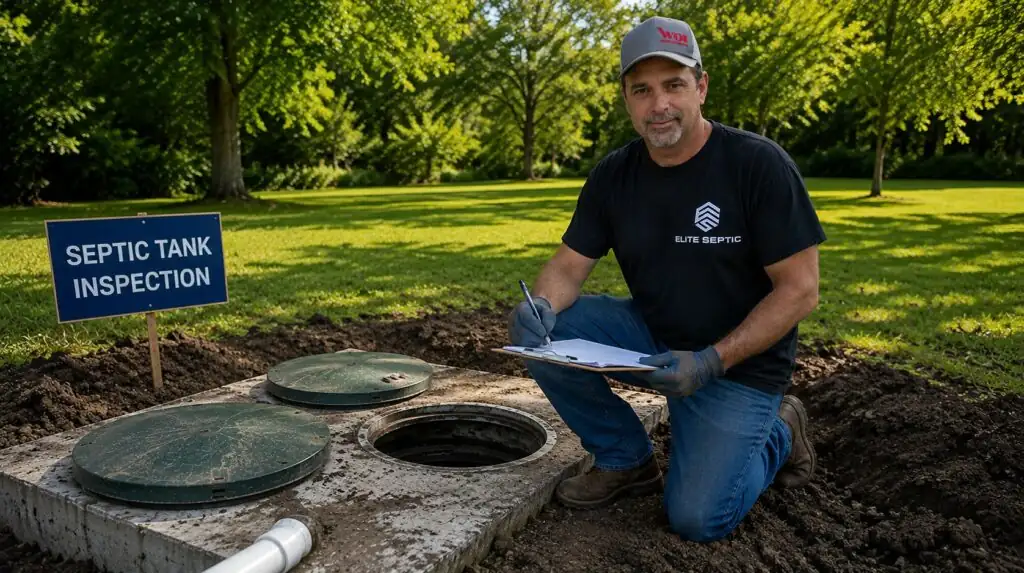
What you get with every camera inspection
- A live walkthrough of the footage while the camera is in the line
- The problem located on the surface and marked, with an approximate depth
- Video recording of the run, so you are not relying on memory
- Pipe material, diameter and condition identified where visible
- A plain-language explanation of what needs doing and how urgent it is
- A flat-rate quote for the repair, with no obligation to have us do it
What It Finds
What a Sewer Camera Inspection Reveals
These are the faults a camera identifies, in the order of how often we find them on East Texas properties.
Root Intrusion
The most common finding around Lufkin. Pine and hardwood roots find any joint, crack or loose seal and grow toward the water inside. Left alone they fill the pipe and eventually break it apart. The camera shows exactly which joint and how far in.
Blockages and Obstructions
Wipes, hygiene products, paper towels and foreign objects that have caught on something and collected everything since. Seeing what the blockage is made of decides whether it can be cleared or whether the pipe has to come up.
Grease and Scale Buildup
Cooking fat hardens on the pipe wall and narrows the bore over years, and older cast iron scales from the inside. Both restrict flow long before they block it, which is why the drains slowed gradually rather than all at once.
Cracked, Broken or Collapsed Pipe
Ground movement, root pressure, heavy vehicles overhead and simple age all break pipe. A collapse is the end of the line for snaking, and the camera is what proves it rather than leaving you to find out after paying for a clearing that could never work.
Bellies and Sags in the Run
Where soil has settled beneath a section, the pipe dips and holds standing water and solids. A belly does not clear by snaking, and it will keep blocking until the section is dug up and re-laid to fall.
Offset and Separated Joints
Sections that have shifted apart or dropped out of alignment let effluent escape into the soil and let roots and soil in. Common on older clay and Orangeburg pipe, and a frequent reason a line keeps blocking at the same point.
Pipe Material, Size and Age
Clay, cast iron, Orangeburg, ABS or PVC each fail in their own way and on their own timescale. Knowing what is actually in the ground changes both the diagnosis and what the repair should be replaced with.
Line Location and Depth
A transmitter in the camera head is tracked from the surface, so the run can be traced and the fault marked with a rough depth. That is what turns an exploratory trench into a targeted excavation.
Lost Cleanouts and Buried Lines
On older rural properties nobody knows where the lines run or where the tank sits. Tracing the line with the camera is often the quickest way to find both, particularly where records were never kept.
Documented Evidence
The run is recorded, so the findings exist as footage rather than an opinion. That matters in a property sale, a dispute with a contractor, or any conversation where somebody needs to see it to believe it.
Once we know what the camera found, we handle the work: septic tank and line repair, septic system replacement, ongoing maintenance and 24/7 emergency septic service across East Texas.
Step By Step
How a Sewer Camera Inspection Works
The whole thing is straightforward, and you are welcome to stand and watch the monitor for all of it.
1. Tell Us What It Is Doing
Which fixtures are affected, whether it is one drain or all of them, how long it has been going on, and whether it has been snaked before. That tells us where to start and often what we are likely to find.
2. Find an Access Point
The camera goes in through a cleanout where one exists, or through a removed fixture or the tank inlet where one does not. On older properties without a cleanout, part of the visit is finding a sensible way in.
3. Run the Camera Through the Line
The camera head is fed along the pipe on a flexible rod while the footage plays on a monitor. We go slowly, because the interesting things are joints, transitions and low points rather than open pipe.
4. Locate and Mark the Fault
When we find the problem, a transmitter in the camera head is tracked from the surface so the spot can be marked in the yard with an approximate depth. That is what keeps any excavation small and targeted.
5. Watch the Footage Together
We show you what we found and explain it as we go. Roots, a belly holding water, a separated joint, a collapse — they all look like what they are once somebody points them out on the screen.
6. Findings, Footage and Options
You get the recording and a plain explanation of what needs doing, what can wait, and a flat-rate quote for the repair. If you would rather take the footage elsewhere for a second opinion, that is entirely fine.
How long does a sewer camera inspection take?
Most residential inspections take under an hour once we have access to the line. The variables are how easily the camera can be got into the pipe and how long the run is. Properties with an accessible cleanout are quick; properties where the cleanout is buried, painted over or was never installed take longer, because getting in has to be solved first. If the line is completely blocked we may need to clear enough of it to pass the camera, which adds time but usually answers the question in the same visit.
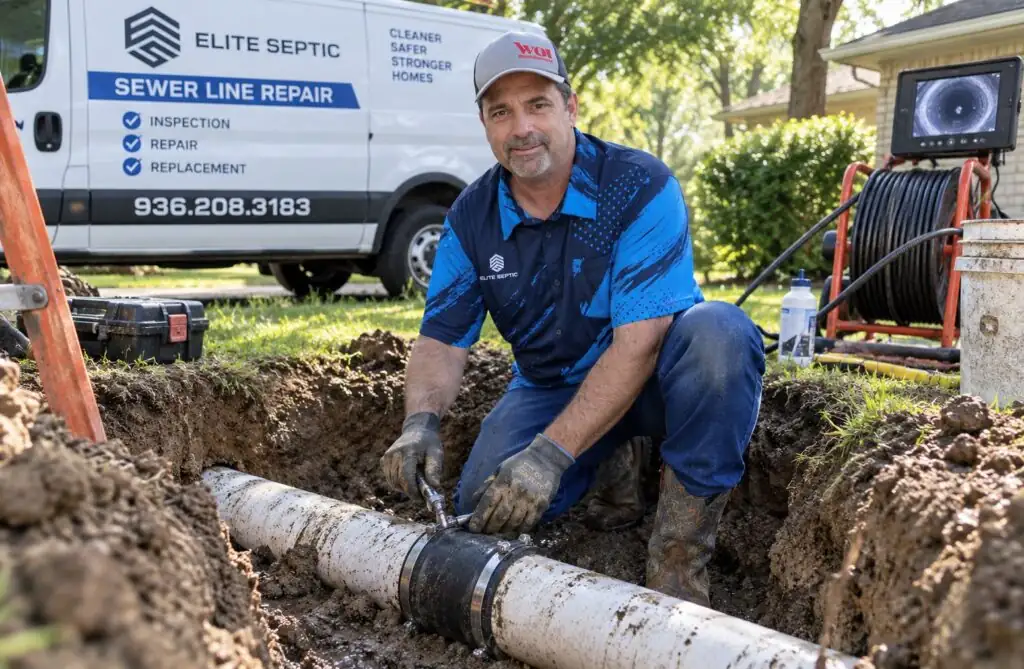
When a Camera Inspection Is Worth Doing
A camera earns its cost whenever the alternative is digging to find out. These are the usual reasons people book one:
- A line that keeps blocking in the same place after every snaking
- Slow drains across the house with no obvious cause at the tank
- Before buying a property with mature trees and an older sewer line
- Before excavating, so you dig once in the right place
- After a backup, to establish whether the pipe itself was damaged
- To locate a line, a cleanout or a tank on a property with no records
- Recurring odor or a wet patch that suggests effluent escaping a joint
The common thread is uncertainty. If you already know what is wrong, a camera adds little. If you are about to spend money on a guess, it is the cheapest hour you will buy.
Who Books One
Camera Inspections for Homeowners, Buyers and Contractors
The camera is the same; what people need from it is not. Here is how the job usually looks depending on who is asking.
Homeowners with a recurring blockage
The classic case. A line has been snaked two or three times and keeps closing up again, which almost always means the cause is structural rather than something that washed down. The camera identifies whether it is roots at a joint, a belly holding solids, or a section that has already broken.
Buyers and pre-purchase checks
A standard home inspection does not put a camera down the sewer line, and a line full of roots gives no warning during a walkthrough. On an older property with mature trees it is worth doing during the option period, while there is still room to negotiate on what it finds.
Before you dig anything
Excavating on a guess is how a small repair turns into a trench across a lawn. Locating and marking the fault first means the hole goes where the problem is. It also finds the lines you did not know were there before a fence post or a driveway goes through one.
Landlords and property managers
Recurring drain complaints at a rental are expensive in call-outs and in goodwill. Establishing once whether the line is failing, with footage to support it, turns an open-ended series of visits into a defined repair you can budget and schedule.
Restaurants and small businesses
Commercial lines carry heavier and greasier loads, and grease narrows a pipe long before it blocks it. A camera shows how much bore is left, which turns cleaning intervals into something based on the actual condition of the line rather than on how recently it last backed up.
Alongside a septic inspection
Where a system will not clear but the tank and drainfield both look reasonable, the line between them is the remaining suspect. Running the camera as part of a septic evaluation closes that gap and stops a working system being blamed for a broken pipe.
What Comes Next
What the Footage Means for the Repair
A camera inspection is only useful if it changes what you do next. What we find tends to point at one of two outcomes.
Faults that can usually be cleared
- Soft blockages of wipes, paper and debris caught on a joint
- Grease and scale narrowing an otherwise sound pipe
- Fine root hairs that have entered but not yet displaced a joint
- A partial obstruction sitting on an intact, correctly graded run
- Buildup at a transition between two pipe sizes or materials
- Debris washed in through an open or damaged cleanout
- A line that has simply never been cleaned in decades of use
Faults that need the pipe opened up
- A collapsed or crushed section, where nothing can pass through
- Heavy root masses that have already displaced or broken a joint
- A belly or sag holding standing water, which will keep re-blocking
- Joints that have separated or dropped out of alignment
- Cracked or fractured pipe leaking effluent into the surrounding soil
- Deteriorated Orangeburg or badly scaled cast iron near end of life
- A line laid to the wrong fall, which no amount of cleaning corrects
Why Us
Why Choose Elite Septic Service for Camera Inspections
10 Years on These Lines
We have worked on septic and sewer lines in East Texas for 10 years. Reading footage is a skill: knowing whether a shadow at a joint is a root or a stain is the difference between a correct diagnosis and an unnecessary dig.
You Watch It With Us
The monitor is right there and you are welcome to stand over it. Nothing about this needs to be taken on trust, and seeing the fault yourself makes the decision about the repair a great deal easier.
Located and Marked, Not Estimated
A transmitter in the camera head is tracked from the surface so the fault is marked in the yard with an approximate depth. That is what keeps an excavation targeted instead of exploratory.
Footage You Keep
The run is recorded and it is yours. Useful for a property sale, a second opinion, an insurance claim, or simply having the evidence when the same argument comes round again in two years.
We Can Do the Repair Too
The crew reading the footage is the crew that repairs and replaces these lines, so the diagnosis and the fix do not get separated between two companies with different opinions about what the video shows.
No Manufactured Urgency
If the line is sound and the blockage was a one-off, we say so. A camera is very easy to use as a sales tool, and we would rather you called us again in five years than felt sold to today.
Licensed, Insured and Locally Based
Elite Septic Service is a locally owned, licensed and insured contractor working across Lufkin, Jasper and the surrounding East Texas counties, with free estimates and flat-rate pricing.

Questions worth asking before booking a camera inspection
- Will I be able to watch the footage live as you run the camera?
- Do I get a copy of the recording afterwards?
- Do you locate and mark the fault on the surface, with a depth?
- What happens if the line is too blocked to pass the camera?
- Will you tell me if the problem can be cleared rather than dug up?
- Can you carry out the repair yourselves if I want you to?
- Are you licensed and insured for this work in Texas?
We answer all seven before we book anything — and you should expect the same from anyone else you call.
Warning Signs
Signs You Need a Sewer Camera Inspection
Any one of these is worth a camera before it is worth a shovel. Several together usually mean the pipe itself has a problem rather than something that washed into it.
The same line blocks again and again
A blockage that returns to the same spot after every snaking is not bad luck. Something structural is catching everything that passes, and a camera is the only way to see what.
Drains slowing across the whole house
One slow fixture is a local clog. Sinks, tubs and toilets all slowing together points at the main line out of the building, somewhere between the house and the tank.
Gurgling toilets and plumbing
Air pushed back through the traps means the line is not clearing freely. It is one of the earliest signs of a partial obstruction, and it usually predates a full backup by weeks.
Mature trees near the line
Pines and hardwoods send roots toward the wettest ground on a property, and a sewer line is exactly that. On older clay or Orangeburg pipe near big trees, root intrusion is close to inevitable.
A wet or sunken patch along the run
Ground that stays damp, smells, or has begun to settle in a line across the yard suggests effluent escaping a broken joint and washing soil away beneath the surface.
Odor with no obvious source
A sound line is sealed. Persistent sewage smell indoors or along the run of the pipe points at a crack, a separated joint or a failed seal letting gas out where it should not.
You are about to dig
Fence posts, driveways, tree removal, an addition. Knowing where the line runs and what condition it is in before machinery arrives costs an hour and saves an emergency repair.
Buying an older property
A general home inspection will not put a camera down the sewer line. On an older house with mature trees, that is the one part of the plumbing capable of carrying a five-figure surprise.
Nobody knows where anything runs
No records, no visible cleanout, no idea where the tank is. Tracing the line with the camera is often the fastest way to establish what you actually own and where it goes.
Not sure whether you need a camera down the line or a full septic system inspection? Describe the symptoms when you call and we will tell you which one answers your question before you pay for the other.
Where We Work
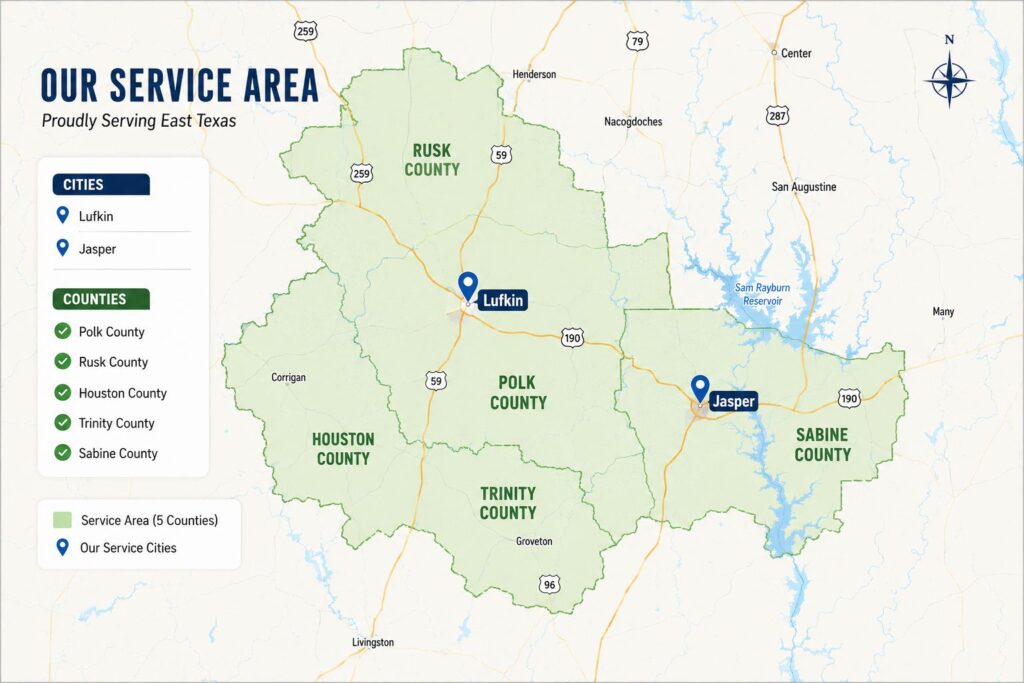
Sewer Camera Inspections Across Lufkin and East Texas
What a camera finds here is shaped by local conditions. East Texas is pine and hardwood country, and roots head for the wettest ground on a property, which is the sewer line. Add the older clay and Orangeburg pipe still in service on plenty of properties around Lufkin, heavy clay soil that shifts as it wets and dries, and long wet spells that keep the ground moving, and root intrusion at separated joints becomes the single most common thing we pull up on a monitor.
Rural properties bring a second problem: records. Lines laid decades ago on acreage were often never documented, and the cleanout has long since been buried or paved over. Tracing the run with the camera is frequently the quickest way to establish where the line goes and where the tank sits. We run camera inspections throughout:
- Sewer camera inspection in Lufkin, TX
- Sewer camera inspection in Jasper, TX
- Sewer camera inspection in Angelina County
- Sewer camera inspection in Polk County
- Sewer camera inspection in Rusk County
- Sewer camera inspection in Houston County
- Sewer camera inspection in Trinity County
- Sewer camera inspection in Sabine County
Whatever the footage shows, we can take it from there: septic tank and line repair, septic system replacement, scheduled maintenance, a full septic inspection, or 24/7 emergency septic service. See all of our septic services, or check the full East Texas service area if your property is not listed above.
More septic services in Lufkin, TX: septic tank installation, septic tank repair, septic tank inspection, septic system replacement, emergency septic service, septic system maintenance, drain cleaning and sewer line repair. See everything we offer locally on our septic service in Lufkin, TX page.
Sewer Camera Inspection FAQs
Common questions about video sewer line inspections across Lufkin and East Texas. If yours is not here, call and ask.
What is a sewer camera inspection?
A waterproof video camera on a flexible rod is fed into the sewer line through a cleanout or other access point, and the footage plays on a monitor in real time while we run it. It shows the inside of the pipe: blockages, root intrusion, grease buildup, cracks, separated joints, bellies holding water, and the pipe material and condition. A transmitter in the camera head lets us track its position from the surface, so any fault can be marked in the yard with an approximate depth.
How much does a sewer camera inspection cost?
It is priced as a single visit rather than by the hour, and it is a small fraction of what exploratory digging costs. The variables are access and line length: a property with an accessible cleanout is straightforward, while one where the cleanout is buried or was never installed takes longer because getting into the line has to be solved first. Estimates are free and the price is agreed before we start. If the inspection leads to a repair, you get a flat-rate quote for that separately.
How long does it take?
Usually under an hour once we have access to the line. Longer if the cleanout has to be located or uncovered, or if the line is blocked badly enough that we need to clear part of it before the camera can pass. In most cases you have an answer, a marked location and the footage in the same visit.
Is a camera inspection the same as a septic inspection?
No, and the difference matters. A septic inspection evaluates the system itself: the tank, sludge and scum levels, baffles, and the condition of the drainfield. A camera inspection looks inside the pipes, which is a separate question. Where a system will not clear but the tank and field both appear sound, the line between them is the remaining suspect, and that is where a camera earns its cost. We run both, and if you describe the symptoms on the phone we will tell you which one to start with.
Do you need a cleanout to run a camera?
A cleanout is the easiest access point but not the only one. Where there is not one, the camera can often go in through a removed toilet, a roof vent on some layouts, or the tank inlet. On older rural properties without a cleanout, finding a workable way in is part of the visit. If it turns out that installing a cleanout is the sensible answer, we will tell you what that involves before doing anything.
Can a camera inspection find a leak or a broken pipe?
Yes, and it is one of the main reasons to run one. Cracks, fractures, crushed sections, separated joints and full collapses are all visible on the footage, along with soil or roots entering where the pipe has failed. The camera also identifies bellies where the pipe has sagged and holds standing water, which is a fault snaking will never fix. Locating the break from the surface is what allows a targeted excavation rather than a trench.
Will the camera clear my blockage?
No, a camera is a diagnostic tool rather than a cleaning one. It tells you what the obstruction is and where it sits, which is what decides whether the line can be cleared or has to be opened up. If a line is completely blocked we may need to clear enough of it to pass the camera through, but that is done to get the picture rather than as the repair itself.
Should I get one before buying a house?
On an older property, particularly one with mature trees, it is worth doing. A standard home inspection does not put a camera down the sewer line, and a line full of roots or a collapsed section gives no warning during a walkthrough. Run it during the option period, while you still have room to negotiate on what it finds. On a rural property with a septic system, a septic inspection alongside it covers the other half of the picture.
What causes most sewer line problems in East Texas?
Roots, by a wide margin. This is pine and hardwood country and roots grow toward the wettest ground available, which is the inside of a sewer line. They enter at joints and cracks, then expand until they fill or break the pipe. After that: grease and scale narrowing the bore over years, ground movement in clay soil that separates joints or creates sags, and simple age on older clay and Orangeburg pipe that has reached the end of its service life.
How do I book a sewer camera inspection in Lufkin?
Call Elite Septic Service at +1 936-208-3153 or send a request through our contact page. Tell us the address, which fixtures are affected, how long it has been happening and whether the line has been snaked before. We will run the camera, show you the footage as we go, mark any fault on the surface, and give you the recording along with a flat-rate quote for whatever it needs.
Need a Sewer Camera Inspection in Lufkin, TX?
Tell us the address, which drains are affected and whether the line has been snaked before. We will run the camera, show you the footage while it is in the pipe, mark any fault on the surface with a depth, and give you the recording along with a flat-rate quote — with no obligation to have the repair done by us.
- Watch the footage live, and keep the recording afterwards
- Faults located and marked, so any digging stays targeted
- Free estimates and flat-rate pricing agreed up front