
Septic Inspections Across East Texas
Septic Tank Inspection in East Texas
A septic inspection tells you what is buried in the yard and whether it works: how full the tank is, whether the baffles and components are sound and whether the drainfield is accepting water. Elite Septic Service inspects systems for buyers, sellers and owners across Lufkin, Jasper and East Texas, with a written report and photographs.
- Tank opened, measured and checked
- Pumps, floats, alarms and aerobic parts tested
- Written report with photographs

Inspection Overview
What a Septic Inspection Covers
A general home inspection usually stops at the plumbing inside the house. A septic inspection goes further: we locate the tank and lids, open the tank, measure the sludge and scum layers, check the inlet and outlet baffles and the tank structure, test any pumps, floats and alarms, and walk the drainfield looking for saturation or surfacing.
The result is a written report you can use to make a decision, whether that is buying a property, planning an addition or simply knowing what you have.
Who needs a septic inspection?
Buyers before closing, sellers before listing, owners planning an addition or a change of use, and anyone who has never had their system looked at. For buyers, our guide to septic inspection before buying a home explains what to ask for and when.
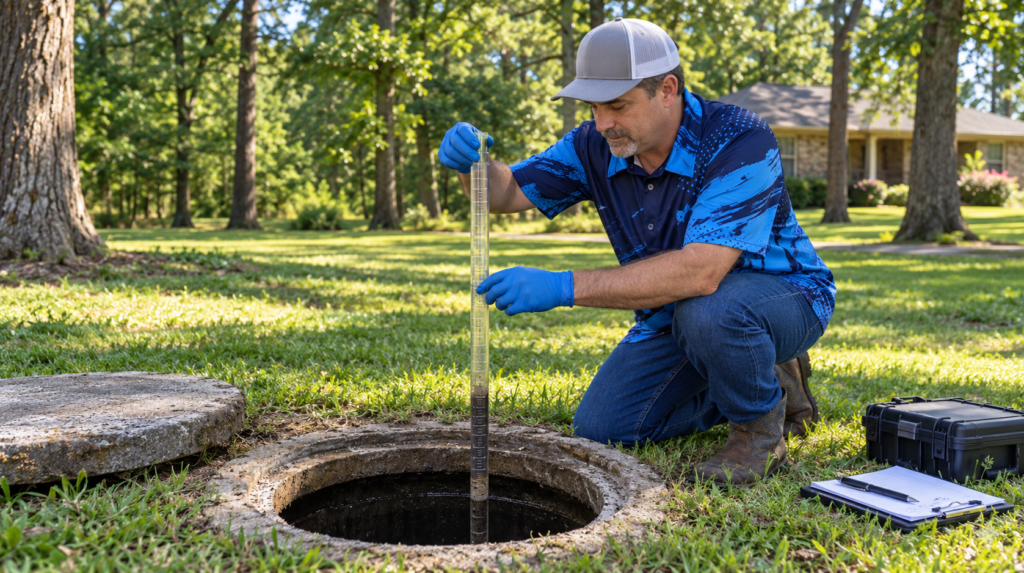
Your inspection report includes
- Tank location, size and condition
- Sludge and scum measurements
- Baffle, inlet and outlet condition
- Pump, float and alarm test results
- Drainfield observations
- Photographs and recommendations
What We Inspect
Septic Inspection Services
Every inspection is tailored to the system and the reason you need it.
Real Estate Inspections
For buyers and sellers, timed to fit the option period, with a report you can share with agents and lenders.
Routine Condition Checks
A baseline inspection for owners who want to know what they have and what to watch for.
Aerobic System Inspections
Compressor, diffusers, chlorinator, spray heads, control panel and alarms checked on aerobic units.
Pump System Checks
Pump tanks, floats and high-water alarms tested so a failure is caught early.
Drainfield Assessment
The field is walked for wet spots, surfacing effluent and signs that it is struggling to absorb.
Tank Location and Records
For properties with no records, we locate the tank and lids and document what is there.
If the line from the house needs a closer look, add a sewer camera inspection. If the inspection finds a problem, we can handle the septic tank repair.
Step By Step
How a Septic Inspection Works
Most inspections are completed in a single visit.
1. Booking and History
We ask for the address, any records, the age of the house and whether the property is lived in full-time.
2. Locate the System
We find the tank, lids, any pump tank and the drainfield.
3. Open and Measure
The tank is opened and the sludge and scum layers are measured.
4. Test Components
Pumps, floats, alarms and aerobic parts are run and checked.
5. Walk the Field
The drainfield or spray area is checked for wet spots and surfacing.
6. Written Report
You receive a report with findings, photographs and recommendations.
How long does a septic inspection take?
Most inspections take one to three hours on site, depending on how easy the tank is to find and open and whether the system has pumps or an aerobic unit. Buried lids with no records take longer. The written report follows shortly after the visit.
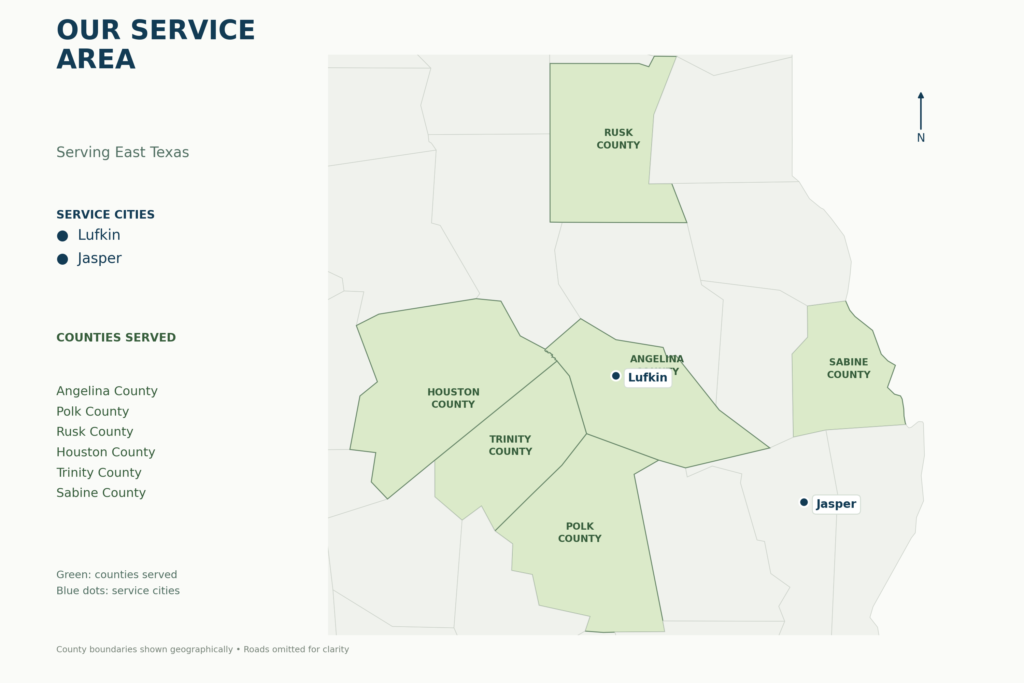
Choose Your Location
Septic Tank Inspection Near You
Local rules, lake properties and soil conditions shape what an inspection needs to look at. Choose your location for local detail.
Buying a house? Book early in your option period so there is time to act on the findings.
Septic Tank Inspection FAQs
Common questions about septic inspections in East Texas.
Is a septic inspection required when buying a home in Texas?
How much does a septic inspection cost?
What is the difference between a home inspection and a septic inspection?
Do I need to be there for the inspection?
What happens if the inspection finds a problem?
How often should a septic system be inspected?
Need a Septic Inspection?
Tell us the address and your deadline. We will schedule the inspection and send a clear written report.
- Written report with photos
- Flat-rate pricing
- Licensed and insured