
Septic Installation Across East Texas
Septic Tank Installation in East Texas
A new septic system is a permitted construction project, not a tank dropped in a hole. Elite Septic Service designs and installs conventional and aerobic septic systems for new homes, manufactured homes, shops and lake properties across Lufkin, Jasper and the surrounding East Texas counties, starting with the soil and finishing with a system the inspector signs off.
- Site evaluation, design and permitting handled for you
- Conventional, aerobic and low-pressure systems
- Free estimates and flat-rate pricing

Installation Overview
What Goes Into a New Septic System
Every new system in Texas starts with a site evaluation. The soil is examined, the lot is measured for setbacks from wells, property lines and water, and the system is sized to the number of bedrooms and the expected daily flow. Only then can a design be drawn and submitted to the permitting authority for approval.
Once the permit is issued, the installation itself is usually a matter of days: excavation, setting the tank, laying the drainfield or installing the aerobic unit and spray field, connecting the house line and passing inspection before anything is covered.
Conventional or aerobic?
A conventional system uses a tank and a gravity drainfield and needs very little beyond regular checks. An aerobic system treats wastewater to a higher standard and fits sites a gravity field cannot use, but it needs power, a maintenance contract and inspections every four months. The soil and the lot usually make the decision; our guide to aerobic vs. conventional systems explains the trade-offs.
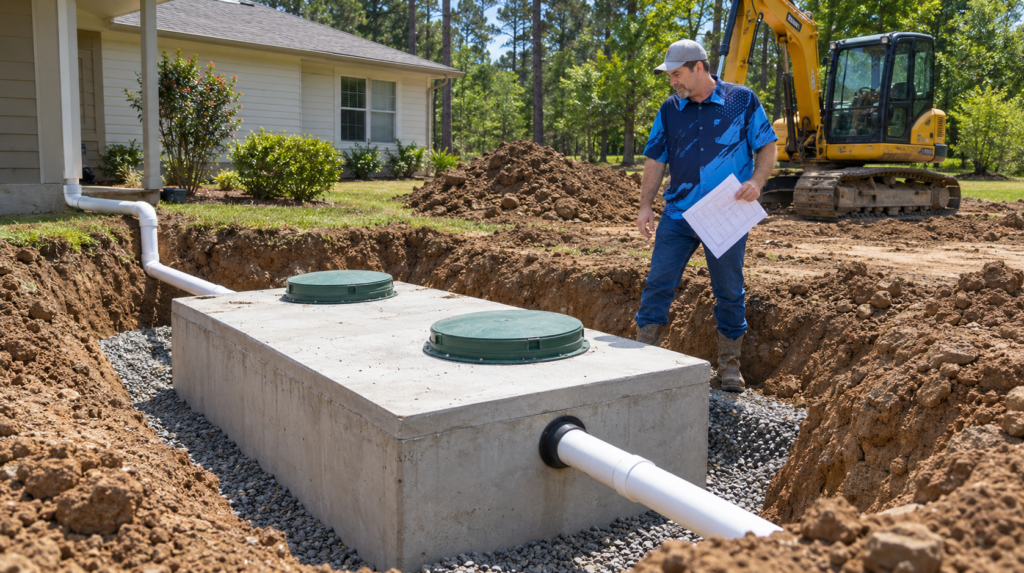
Included in every installation
- Site and soil evaluation
- System design sized to the property
- Permit application and approval
- Excavation, tank setting and drainfield
- Inspection before backfill
- Guidance on looking after your system
System Types
Septic Systems We Install
The right system depends on the ground, the lot and how the property will be used. These are the systems we install most often across East Texas.
Conventional Gravity Systems
A tank and gravity drainfield for sites with suitable soil and enough room. The simplest system to own and the lowest running cost.
Aerobic Treatment Units
Mechanical treatment with a spray or drip field for tight lots, poor soil or high water tables. Requires a maintenance contract under Texas rules.
Low-Pressure Dosing Systems
A pump tank doses effluent to the field in measured amounts when the best soil sits uphill of the house or the ground needs even distribution.
Manufactured and Mobile Homes
Systems sized and placed for manufactured homes, including land that has never had a system before.
Shops, Guest Houses and RV Pads
Additional or expanded systems for outbuildings, second dwellings and RV hookups, designed so the main system is not overloaded.
Lake and Rural Properties
Systems for lake lots and acreage where setbacks from water, wells and slopes shape the design from the start.
Replacing a failed system rather than starting fresh? See septic system replacement. Not sure what size you need? Read what size septic tank do I need.
Step By Step
How a Septic Installation Works
From first visit to final inspection, a typical installation follows six steps. The permit stage takes the most time; the physical work is usually quick.
1. Site Visit
We walk the property, talk through the house, bedrooms and future plans, and look at where a system can go.
2. Soil and Site Evaluation
The soil is examined and the lot measured for setbacks, so the design is based on what is actually in the ground.
3. Design and Written Quote
You receive a system design and a flat-rate price before anything is built.
4. Permitting
We prepare and submit the application to the correct permitting authority and answer any questions it raises.
5. Installation
Excavation, tank, drainfield or aerobic unit and house connection, usually completed in a few working days.
6. Inspection and Handover
The system is inspected before it is covered, then we explain how to look after it.
How long does a septic installation take?
The permit stage usually takes the longest, from a couple of weeks to longer depending on the authority and the time of year. Once approved, most residential installations take two to four working days on site, a little longer for aerobic systems or sites that need clearing. Wet weather can delay excavation in low-lying ground.
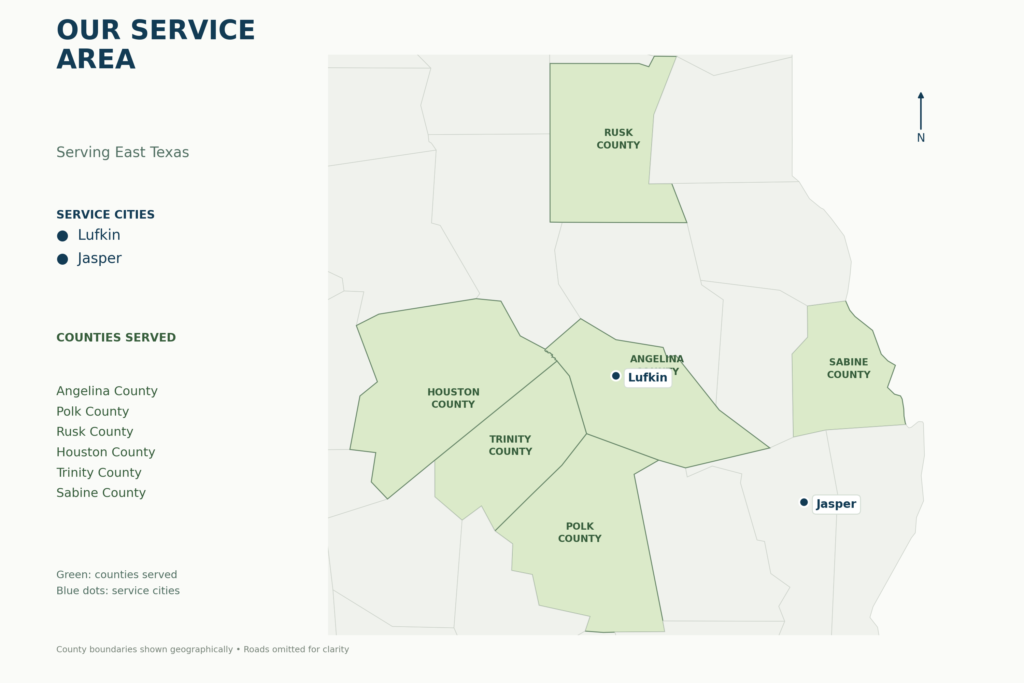
Choose Your Location
Septic Tank Installation Near You
Soil, permitting and site conditions change from one part of East Texas to the next, so our two main service areas have dedicated installation pages. Choose your location for local detail, or see the counties we cover.
Want to know what you are working with before you buy land or build? A septic inspection or site visit is a good place to start.
Septic Tank Installation FAQs
Common questions about installing a new septic system in East Texas.
Do I need a permit to install a septic system in Texas?
How much does a new septic system cost?
What size septic tank do I need?
Can a septic system be installed on a small or wet lot?
How long does a new septic system last?
Do you install septic systems for new construction?
Planning a New Septic System?
Tell us about the property and what you plan to build. We will arrange a site visit and give you a clear, flat-rate quote.
- Free estimates
- Flat-rate pricing
- Licensed and insured