
Complete Septic System Replacement
Septic System Replacement in Lufkin, TX
When a system has reached the end of its life, patching it costs more than it saves. Elite Septic Service designs, permits and installs complete replacement septic systems across Lufkin, Angelina County and the surrounding East Texas counties — tank, drainfield and everything between — sized for the soil you actually have and the household actually living there.
- 10 years replacing septic systems on East Texas soils
- Permitting, site evaluation and design handled for you
- Free estimates and flat-rate pricing agreed before we break ground

Replacement Overview
When a Septic System Needs Replacing, Not Repairing
Septic systems do not last forever. A concrete tank may hold for forty years, but the drainfield in front of it is the part that wears out, and it wears out quietly. Soil that once absorbed effluent gradually clogs with the fine solids that escape a tank with a failed baffle or an overdue pumping schedule, until the ground simply stops taking water. At that point no amount of pumping fixes it, because the tank was never the problem.
Most replacement conversations around Lufkin start one of three ways. A drainfield has failed and the yard is wet. A tank has cracked, collapsed or corroded past repair. Or a household has outgrown a system that was sized for a much smaller house decades ago, and it now backs up every time there are guests.
Repair or replace: how to tell the difference
Repairs make sense when the failure is a component: a broken baffle, a cracked lid, a failed pump or float, a blocked line, a section of crushed pipe. Those are bounded problems with a known cost. Replacement becomes the honest answer when the drainfield itself has stopped absorbing, when the tank is no longer watertight, when the system is too small for the house it serves, or when repeated repairs have started stacking up toward the cost of doing it properly once.
We would rather tell you a system has years left in it than sell you a replacement you do not need. Where it is genuinely borderline we will say so, price both routes, and let you decide with the numbers in front of you.
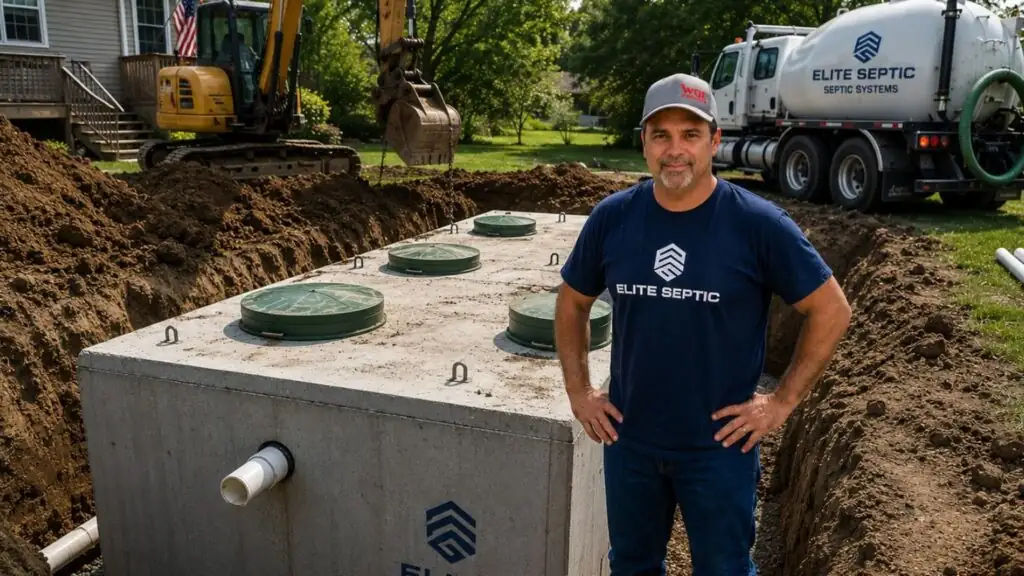
What a full replacement includes
- A site and soil evaluation to establish what the ground will accept
- System design sized to the household, the lot and the soil type
- Permit application handled through the county authorized agent
- Decommissioning and removal or proper abandonment of the old system
- Excavation, new tank set, new drainfield or treatment unit installed
- Final inspection, backfill, grading and cleanup of the work area
What We Replace
Septic System Replacements We Handle
Not every replacement means starting from nothing. Sometimes the tank is sound and only the field needs rebuilding. These are the jobs we take on.
Complete System Replacement
Tank, lines, distribution and drainfield replaced as one job. This is the route when the whole system has aged out together, or when the original was never permitted or sized correctly for the property.
Septic Tank Replacement
A cracked, corroded, collapsed or no longer watertight tank swapped for a new one. Where the drainfield still has life in it, replacing the tank alone is the cheaper and entirely legitimate fix.
Drainfield and Leach Field Replacement
The most common replacement we do. Once soil has clogged, it does not recover, so a new field is built in fresh ground with trenches sized to what the soil will actually absorb.
Conventional Gravity Systems
Where the soil percolates well enough and the lot has fall to work with, a conventional tank and gravity trench system remains the simplest and least expensive thing to own and maintain.
Aerobic Treatment Units
Common across East Texas because of the clay. An aerobic unit treats effluent to a higher standard so it can be dispersed on ground that would never take a conventional field, and it comes with pumps, floats and a control panel.
Spray and Drip Dispersal Fields
Where surface or shallow dispersal is the workable answer, we install spray heads or subsurface drip lines with the chlorinator, pump tank and controls the system needs to run properly.
Pumped and Low-Pressure Systems
On lots where the field sits above the tank or the ground will not cooperate, effluent has to be pumped and dosed rather than allowed to run. That means a pump tank, floats, a panel and an alarm.
Undersized and Overloaded Systems
Added bedrooms, a shop bathroom, an RV hookup or simply more people than the original design allowed for. If the system is backing up under normal use, it is being asked to do more than it was built to.
Old, Failed and Abandoned Systems
Cesspools, undocumented tanks, homemade fields and systems installed before permitting caught up with them. Old tanks have to be properly pumped and either removed or filled, not simply left in the ground.
Site Evaluation, Design and Permits
Every replacement starts with soil and ends with a permit. We carry out the site evaluation, produce the design, and file through the county authorized agent so the finished system is legal and on record.
Not sure yet whether you are looking at a replacement? A septic inspection will tell you, and we also handle septic tank repair, new septic tank installation and emergency septic service across East Texas.
Step By Step
Our Septic System Replacement Process
A replacement is a permitted construction job, not a call-out. Here is how one runs from the first phone call to the final inspection.
1. Site Visit and Assessment
We come out, look at the existing system, and establish what has actually failed. Sometimes that changes the answer — a tank in good order in front of a dead field is a smaller job than a full replacement.
2. Soil and Site Evaluation
Soil borings or a backhoe pit tell us what the ground will absorb, where the water table sits, and how much usable area the lot has. On East Texas clay this is the step that decides whether you get a conventional field or an aerobic system.
3. System Design and Written Quote
The system is sized to the soil, the lot and the number of bedrooms, then drawn up. You get a flat-rate quote covering design, permit, materials, excavation and cleanup before anything is committed to.
4. Permitting
We file the application with the county authorized agent — in Angelina County that is the Angelina and Neches River Authority in Lufkin — and handle the back and forth. Permitting is usually the part that sets the schedule.
5. Old System Removed, New One Installed
The old tank is pumped and either removed or properly filled and abandoned, the new tank is set and levelled, and the new field or treatment unit goes in with lines, distribution and any pumps and controls it needs.
6. Inspection, Backfill and Cleanup
The system is inspected and signed off before it is covered, then backfilled, graded to shed water away from the field, and the site left tidy. You get the paperwork and a walk-through of how to look after it.
How long does a septic system replacement take?
The installation itself is usually two to four days on site for a conventional system, and a little longer for an aerobic unit with pumps, panels and spray or drip dispersal. The wider timeline is set by the soil evaluation and the permit rather than by the digging, so from first visit to finished system is more often two to six weeks. Wet weather extends it, because nobody should be excavating a drainfield in saturated ground. If you are working to a closing date or a build schedule, tell us at the first visit and we will work back from it.
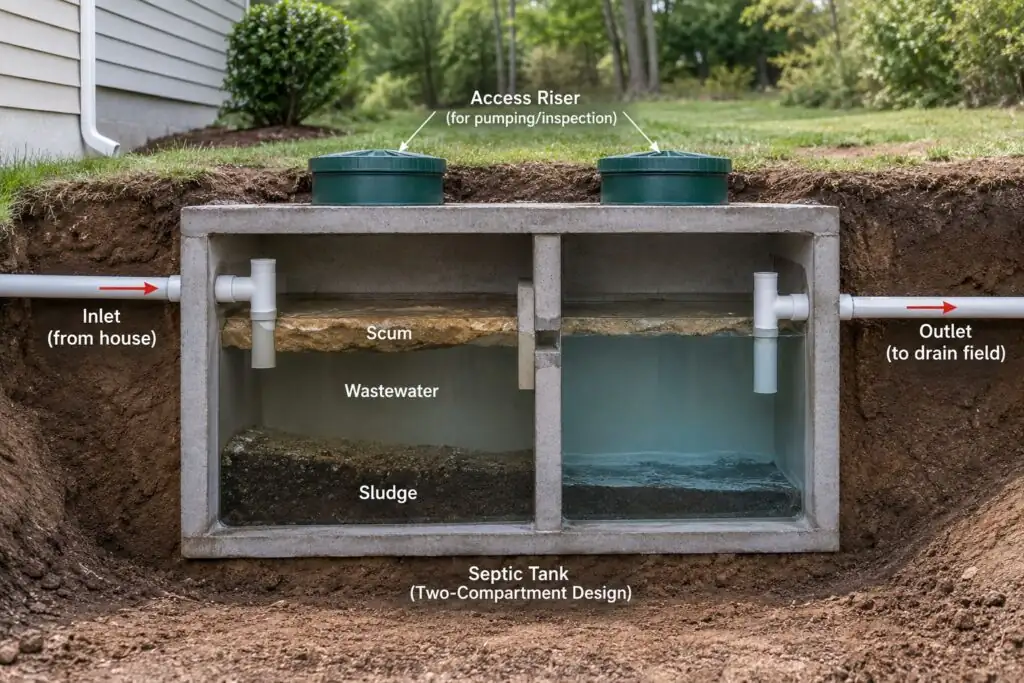
Signs Your System Is Heading for Replacement
Replacement rarely arrives without warning. These are the signs that the system is running out of road:
- Backups that return within weeks of every pump-out
- Standing water or surfacing effluent over the drainfield
- Ground over the field that stays soft when the rest of the yard is dry
- A stripe of grass growing greener and faster over the trenches
- Repairs stacking up, with a new fault every few months
- A tank taking on groundwater or losing effluent through failed walls
- A household that has grown past what the system was designed for
If two or three of those describe your property, an inspection is the cheapest next step. It will tell you whether you are looking at a repair, a new field, or a full replacement — before you spend money on the wrong one.
Cost and Planning
What Drives the Cost of a Septic System Replacement
There is no single price for a replacement, because two properties a mile apart can need very different systems. These are the things that move the number.
Soil type and percolation
This is the biggest single factor. Sandy loam that drains well supports a conventional gravity field, which is the least expensive system to build and to own. Heavy clay that will not percolate pushes you toward an aerobic treatment unit with spray or drip dispersal, and that is a materially bigger job.
System type and size
Systems are sized by the number of bedrooms and the expected daily flow, so a three-bedroom house and a five-bedroom house do not get the same field. Aerobic units add a pump tank, an air compressor, a control panel, an alarm and a chlorinator on top of the tank and dispersal area.
Site access and excavation
A flat, open lot with room for a truck and a backhoe is straightforward. Slopes, trees, rock, tight access, existing driveways and outbuildings all add time. So does having to route around a well, a pond or a property line at the required setback distance.
Removing the old system
An old tank cannot simply be left as it is. It has to be pumped out and then either removed from the ground or crushed and filled so it cannot collapse later. Old drainfield lines and any abandoned cesspool have to be dealt with properly at the same time.
Permits and design work
Every replacement needs a site evaluation, a design and a permit from the county authorized agent. We fold that into the quote rather than leaving you to chase it, and the permit timeline is usually what sets the start date rather than our schedule.
Restoration afterwards
Replacing a system means opening up a good part of a yard. Backfill, grading so surface water runs away from the new field, and tidying the work area are part of the job. Full landscaping and re-sodding is usually something owners prefer to arrange themselves.
Repair or Replace
Repair or Replace: How We Decide
A replacement is the largest bill a septic system will ever hand you, so it should never be the default answer. Here is how the two sides actually break down.
When a repair is the right call
- A broken, missing or corroded inlet or outlet baffle
- A cracked lid, damaged riser or blocked access port
- A failed effluent pump, float switch, compressor or control panel
- A blocked or root-damaged line between the house and the tank
- A crushed or collapsed section of pipe that can be dug and replaced
- A tank overdue for pumping, with a drainfield still absorbing normally
- A single localised fault on an otherwise sound, correctly sized system
When replacement is the honest answer
- A drainfield that has stopped absorbing and no longer recovers
- Effluent surfacing or ponding over the field under normal use
- A tank that is cracked, corroded or no longer watertight
- Backups returning within weeks of every pump-out
- A system undersized for the household now living in the house
- Repairs that have started stacking toward the cost of replacement
- A cesspool or unpermitted system with no records and no compliance
Why Us
Why Choose Elite Septic Service for Your Replacement
10 Years on East Texas Soil
We have replaced systems here for 10 years, on sandy loam, on heavy clay, on slopes and on lots where nothing wanted to fit. Knowing what a soil will actually accept is the difference between a system that lasts and one that fails in five years.
Design Sized to the Property
The system is sized to your soil, your lot and your household, not to whatever is easiest to install. An undersized field is cheap on the day and expensive for the next twenty years.
Permitting Handled for You
Site evaluation, design and the permit application through the county authorized agent are part of the job. You do not end up chasing paperwork between a designer, an installer and the county.
One Crew, Start to Finish
The same people who quote the work do the excavation, set the tank, build the field and are there for the final inspection. Nothing is handed off halfway through to someone who was not part of the design.
Flat-Rate Pricing, Agreed Up Front
Free estimates and a flat rate covering design, permit, materials, excavation and cleanup, agreed before we break ground. Replacements are big enough jobs that surprises in the final invoice are not acceptable.
We Will Tell You Not To
If the tank is sound and only the field has failed, we quote the field. If a repair will genuinely buy you years, we say so. Most of our work comes from people who were told the truth the first time.
Licensed, Insured and Locally Based
Elite Septic Service is a locally owned, licensed and insured septic contractor working across Lufkin, Jasper and the surrounding East Texas counties.

Questions worth asking any replacement contractor
- Will you carry out a soil and site evaluation before designing anything?
- Who applies for the permit, you or me?
- Is the design sized to my soil type and bedroom count?
- What happens to the old tank and the old drainfield lines?
- Does the quote include excavation, backfill and grading?
- Are you licensed and insured for septic work in Texas?
- What maintenance will the new system need, and how often?
We answer all seven before you commit to anything — and you should expect the same from every contractor you get a quote from.
Warning Signs
Signs Your Septic System May Need Replacing
Any one of these on its own may only mean a repair. Several together usually mean the system has reached the end of its working life.
Backups that return after every pump-out
If the house drains normally for a fortnight after a pump and then backs up again, the problem sits downstream of the tank. That pattern points squarely at a drainfield that has stopped absorbing.
Effluent surfacing over the drainfield
Standing water or visible wastewater above the field means the soil is no longer taking what the system sends it. Once a field is surfacing under normal use, it does not recover on its own.
Ground that stays soft and spongy
Soil over the trenches that remains wet when the rest of the yard has dried out is saturated soil. It is the stage before surfacing, and it is the point at which you still have choices.
Bright green grass in stripes over the field
Grass growing greener, thicker and faster over the trenches is being fertilised by effluent sitting too close to the surface. It is the clearest sign visible from the yard and the most commonly ignored.
A tank that will not hold water
Cracked walls, corroded penetrations, a failed lid seat or a liquid level sitting wrong all point to a tank taking groundwater in or losing effluent out. Both are damaging, and past a point neither is patchable.
Repairs every few months
One fault is a repair. A new fault every quarter is a system telling you it has aged out. At some point the running total of repairs passes the cost of doing the job properly once.
A system too small for the household
Added bedrooms, a shop bathroom, an RV hookup or simply more people than the original design allowed. If it backs up under ordinary use, it is being asked for more than it was built to give.
Failure every time it rains
A field that only backs up after several days of rain has almost no capacity in reserve. Each wet spell takes a little more, and East Texas gets plenty of them.
No permit, no records, no idea
Homemade systems, cesspools and undocumented tanks installed before permitting caught up with them. If you cannot establish what is in the ground or whether it was ever legal, replacement is often the only clean answer.
Not sure which of these you are looking at? A septic inspection will tell you whether this is a repair, a new drainfield or a full replacement — before you spend anything on the wrong fix.
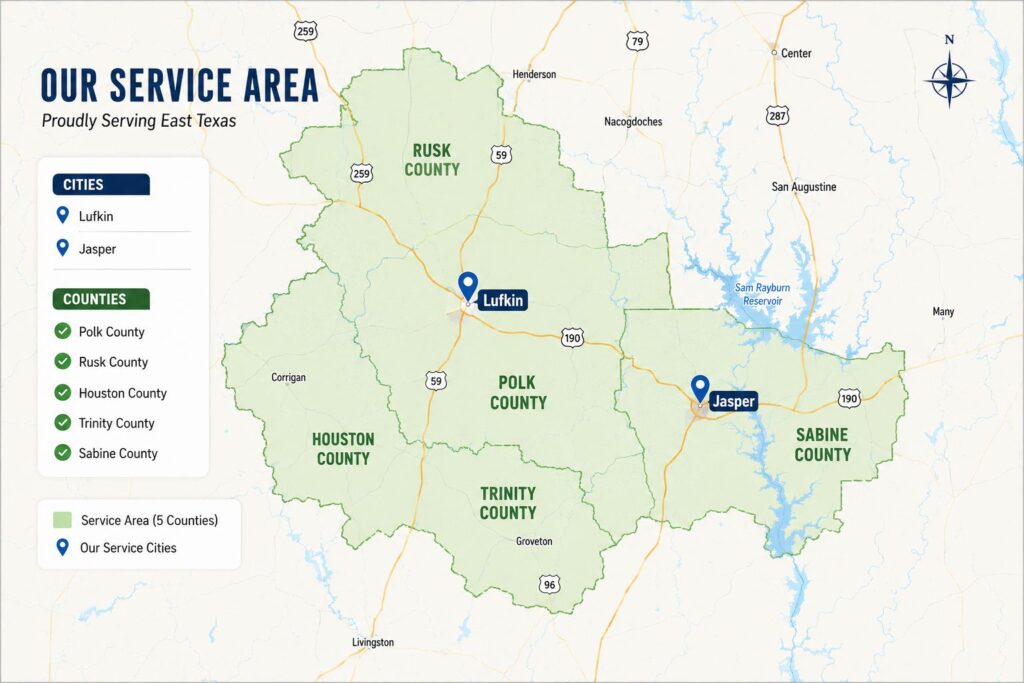
Where We Work
Septic System Replacement Across Lufkin and East Texas
Local ground decides what gets built. Much of Angelina County and the counties around it sits on heavy clay that drains slowly, which is why so many replacements here end up as aerobic treatment units with spray or drip dispersal rather than conventional gravity fields. Where there is sandy loam and fall to work with, a conventional system is still the cheaper and simpler thing to own. Pine and hardwood roots head for the wettest ground on a lot, and long wet spells keep marginal fields saturated, so setbacks and field placement matter more here than a generic design allows for.
Permitting is local too. On-site sewage facilities in Angelina County are permitted through the Angelina & Neches River Authority in Lufkin, and the neighbouring counties each work through their own authorized agent. We replace septic systems throughout:
Before committing to a replacement, a septic inspection will confirm what has actually failed. We also handle septic tank repair, new septic tank installation and 24/7 emergency septic service. See all of our septic services, or check the full East Texas service area if your property is not listed above.
More septic services in Lufkin, TX: septic tank installation, septic tank repair, septic tank inspection, emergency septic service, septic system maintenance, drain cleaning, sewer line repair and sewer camera inspection. See everything we offer locally on our septic service in Lufkin, TX page.
Septic System Replacement FAQs
Common questions about replacing a septic system in Lufkin and across East Texas. If yours is not here, call and ask.
How do I know if my septic system needs replacing?
The clearest indicator is a backup that returns within weeks of every pump-out. That pattern means the problem sits downstream of the tank, in a drainfield that has stopped absorbing. Other signs are effluent surfacing over the field, ground that stays soft when the rest of the yard is dry, a stripe of noticeably greener grass over the trenches, a tank that is cracked or no longer watertight, and repairs arriving every few months. An inspection is the only way to be certain, because it measures sludge and scum levels, checks the tank and baffles, and walks the field rather than guessing from the symptoms.
How much does a septic system replacement cost in Texas?
There is no single figure, because two properties a mile apart can need very different systems. The main drivers are soil type, system type and size, and site access. Sandy loam that percolates well supports a conventional gravity field, which is the least expensive option. Heavy clay usually pushes you toward an aerobic treatment unit with a pump tank, compressor, control panel and spray or drip dispersal, which is a materially larger job. Bedroom count sets the sizing, and slopes, trees, rock or tight access add excavation time. We give free estimates and a flat rate covering design, permit, materials, excavation and cleanup before any work starts.
How long does it take to replace a septic system?
The installation is typically two to four days on site for a conventional system, and longer for an aerobic unit with pumps, panels and dispersal components. The overall timeline is set by the soil evaluation and the permit rather than the digging, so from first visit to a finished, inspected system is more often two to six weeks. Prolonged wet weather extends it, because excavating a drainfield in saturated ground damages the soil structure you are relying on. If you are working to a closing date or a build schedule, say so at the first visit.
Do I need a permit to replace a septic system?
Yes. In Texas, replacing an on-site sewage facility requires a permit from the local authorized agent, along with a site and soil evaluation and a system design. In Angelina County that is the Angelina and Neches River Authority in Lufkin, and the neighbouring counties each work through their own agent. We handle the evaluation, the design and the permit application as part of the job, and the system is inspected and signed off before it is covered.
Can I replace only the drainfield instead of the whole system?
Often, yes, and it is the most common replacement we do. The tank and the drainfield age at different rates: a concrete tank can remain sound for decades while the field in front of it clogs and fails. If an inspection shows the tank is watertight, structurally sound and correctly sized, a new drainfield alone is a legitimate and considerably cheaper fix. It still needs a soil evaluation, a design and a permit, because the new field has to be built in ground that will actually absorb.
What happens to the old septic tank?
It cannot simply be left as it is. The old tank is pumped out and then either removed from the ground entirely or crushed and filled so it cannot collapse into a void later, which is a genuine safety issue on a property with children or livestock. Old drainfield lines and any abandoned cesspool are dealt with at the same time. Proper decommissioning is part of the permitted work, not an optional extra.
Conventional or aerobic: which system will I need?
The soil decides, not preference. A conventional tank and gravity trench system needs soil that percolates well enough to absorb effluent and enough usable area at the required setbacks. Much of the clay around Lufkin will not do that, which is why aerobic treatment units are so common here. An aerobic unit treats effluent to a higher standard so it can be dispersed by spray heads or drip lines on ground a conventional field could never use. It costs more to install and it needs ongoing maintenance under a contract, but on clay it is frequently the only workable design.
What maintenance does a new system need?
A conventional system wants pumping every three to five years depending on household size and tank capacity, and the field kept clear of vehicles, structures and deep-rooted trees. An aerobic system is a different commitment: Texas requires it to be kept under an active maintenance contract with regular inspections by a licensed maintenance provider, and it has a pump, floats, an air compressor, a chlorinator and an alarm that all need checking. We walk you through the routine for whichever system you end up with before we leave.
Will replacing my septic system tear up the yard?
Some of it, unavoidably. A replacement means excavating for the tank and opening trenches for the new field, so a good part of a yard is disturbed. We keep the working area as contained as access allows, backfill, and grade so surface water runs away from the new field rather than sitting on it. Cleanup and grading are included; full landscaping and re-sodding is usually something owners prefer to arrange themselves once the ground has settled.
How do I get a quote for a septic replacement in Lufkin?
Call Elite Septic Service at +1 936-208-3153 or send a request through our contact page. Tell us the address, roughly what you know about the existing system, and what has been happening with it. We come out, assess what has actually failed, carry out the soil and site evaluation, and give you a written flat-rate quote covering design, permit, materials, excavation and cleanup. Estimates are free, and if a repair or a new field alone would solve it, we will tell you that instead.
Need a Septic System Replacement in Lufkin, TX?
Tell us the address, what you know about the existing system, and what it has been doing. We will come out, work out whether you are looking at a repair, a new drainfield or a full replacement, and give you a written flat-rate quote covering design, permit, materials, excavation and cleanup — with no obligation to have the work done by us.
- Free estimates and flat-rate pricing agreed before we break ground
- Site evaluation, system design and permitting handled for you
- Licensed, insured and locally based in East Texas