
Sewer & Septic Line Repair
Sewer Line Repair in Lufkin, TX
When a line has broken, sagged or filled with roots, no amount of clearing brings it back. Elite Septic Service repairs and replaces sewer lines, building drains and septic lines across Lufkin, Angelina County and the surrounding East Texas counties — located and marked before a shovel goes in, so the hole is the size of the problem.
- The fault located and marked to depth before any digging starts
- Spot repairs where a spot repair is enough, replacement where it is not
- Flat-rate pricing agreed before work begins, with free estimates

Line Repair Overview
When a Line Needs Repair Rather Than Clearing
Most drain problems are obstructions, and an obstruction can be cleared. A repair is a different situation: the pipe itself has failed. It has cracked, crushed, dropped out of alignment, sagged into a low spot that holds water, or lost enough wall to roots and corrosion that it no longer functions as a pipe. Cleaning a failed line produces a few weeks of relief and then the same call again.
The tell is repetition. A line cleared two or three times that keeps closing up in the same place is not unlucky. Something down there is catching everything that passes it, and until that something is dug up and replaced, the cycle continues. The other tell is a line that will not pass a cable or a camera at all, which usually means a collapse.
We find it before we dig it
The expensive version of this job is excavating on a guess. A trench dug across a yard looking for a break costs more in restoration than the repair does in pipe, and on a septic property it risks the drainfield, which is the one part of the system nobody wants to disturb.
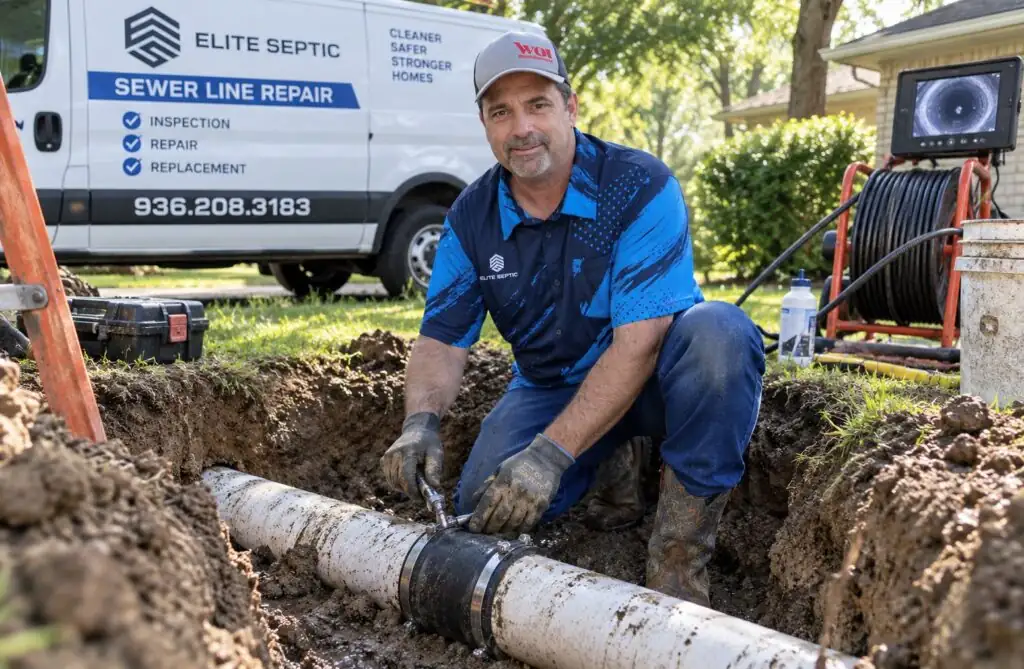
So every repair starts with locating. We put a camera down the line, find the fault, and track the transmitter in the camera head from the surface to mark the spot with an approximate depth. What that turns into is a targeted excavation — a hole where the problem is, rather than a search. It also tells us the pipe material, the diameter and how much sound line sits either side, which is what decides whether this is a two-metre spot repair or a full replacement of the run.
What you get with every line repair
- The fault located and marked on the surface before excavation
- An honest call on spot repair versus replacing the run
- Modern PVC to correct fall, with proper bedding and compaction
- A cleanout installed where one is missing, so future work is easier
- The line re-tested and the site backfilled and tidied
- Flat-rate pricing agreed up front, with free estimates
What Fails
What Actually Breaks Sewer Lines in East Texas
These are the failures we dig up most often on Lufkin-area properties, roughly in the order they turn up.
Roots Through the Joints
Pine and hardwood roots grow toward the wettest ground on a property and enter at a joint or a hairline crack. Once inside they thicken, and the pressure prises the joint open or splits the pipe. By the time roots are visibly breaking a line, cutting them out is maintenance rather than repair.
Bellies and Sags
Soil settles under a section and the pipe dips. Water stands in the low spot, solids drop out and build up, and the line blocks repeatedly no matter how often it is cleared. The only fix is to dig out the section, correct the bedding and re-lay it to fall.
Separated and Offset Joints
Ground movement in heavy clay soil pulls sections apart or drops one out of line with the next. Effluent escapes into the soil, and soil and roots find their way in. Common on older clay pipe and a frequent reason a line keeps blocking at exactly the same distance.
Crushed and Collapsed Sections
Vehicles over a shallow line, heavy equipment during other work, or simple age on a pipe that has lost its strength. A collapse stops everything, will not pass a cable or a camera, and is the one failure where there is no temporary fix worth paying for.
Failed Orangeburg Pipe
Bituminised fibre pipe installed mid-century on plenty of older properties. It deforms into an oval and delaminates from the inside as it ages, and every example still in service is well past its design life. Where we find it, replacement is the only sensible recommendation.
Corroded Cast Iron
Cast iron rusts from the inside out. Scale narrows the bore and catches paper and grease for years, and then the wall thins until sections break through underneath. Under a slab this is a bigger job, and it is worth knowing the condition before it decides for you.
Cracked Pipe Leaking Effluent
A fracture that has not yet blocked anything but is losing effluent into the surrounding ground. The symptom is a wet or sour-smelling patch along the run rather than a slow drain, and the ground beneath can wash out enough to bring the pipe down.
Wrong Fall From the Start
A line laid too flat will not carry solids; laid too steep, water outruns them and leaves them behind. Both block chronically and neither is a cleaning problem. We see this on additions and DIY runs more often than on original installations.
Damaged Tank Inlet and Outlet
The connections at the tank take the most movement and are often the first thing to fail. A broken inlet or a missing outlet baffle changes how the whole system behaves, and it is regularly the real cause of what looked like a line problem further back.
Lines Damaged by Other Work
Fence posts, driveway work, tree removal and new construction all go through undocumented lines on rural properties. Often nobody notices until the drains slow weeks later, by which point the soil around the break has already begun to wash out.
Repair is one option among several. Depending on what we find, the answer may be drain cleaning, septic tank repair, a full system replacement, or 24/7 emergency septic service if the house is out of use.
Step By Step
How a Sewer Line Repair Works
From the first call to a backfilled yard, this is the order the work runs in.
1. Diagnose Before Quoting
What the symptoms are, how long they have been going on, what has already been tried and what is known about the property. A line cleared three times in a year tells us something different from one that stopped overnight, and it changes where we start looking.
2. Camera the Line
A video inspection shows what has failed and where, and rules out the possibility that this is an obstruction after all. It also shows the pipe material and the condition of the run either side, which is what decides the scope of the repair.
3. Locate and Mark
A transmitter in the camera head is tracked from the surface so the fault is marked in the yard with an approximate depth. This is the step that keeps an excavation targeted, and it is the step most often skipped by whoever dug the trench you are still looking at.
4. Agree the Scope and Price
Spot repair or replacement, what has to be crossed to reach it, what the restoration involves, and a flat-rate price. You see the footage the recommendation is based on. If a second opinion would make you more comfortable, take the video and get one.
5. Excavate and Replace
We open only what the repair needs, cut out the failed section and lay modern PVC to correct fall on proper bedding. Where a cleanout is missing, this is the moment to put one in, because every future visit is quicker and cheaper for it.
6. Test, Backfill and Tidy
The line is run under water to confirm it flows and holds, then the trench is backfilled in compacted layers so the ground does not settle into a new belly in two years. The site is left tidy and you are shown what was done.
How long does a sewer line repair take?
A straightforward spot repair — one failed section, reachable ground, nothing to cross — is usually a single day, and the house is back in normal use that evening. It gets longer when the line runs under a driveway, a slab, a mature tree or an addition, when the run is deep, or when the ground is saturated and needs shoring. Replacing a full run from house to tank is typically one to three days depending on length and access. The other variable is permitting: work that changes the on-site sewage facility rather than simply repairing existing pipe can require authorisation from the county, and we will tell you at quote stage whether yours does and handle the paperwork if so.
Spot Repair or Replace the Run?
This is the decision that sets the price, so it is worth understanding how it gets made. A spot repair is usually the right answer when:
- The failure is confined to one clearly identified section
- The pipe either side of it is sound and correctly graded
- The material is PVC or good cast iron with life left in it
- The cause was external damage rather than age
- The line has no history of blocking anywhere else along the run
- Access is reasonable and the excavation stays small
- The rest of the system is in good order and recently inspected
Replacement makes more sense where the pipe is Orangeburg, badly deteriorated cast iron, or clay with multiple separated joints, and wherever the run has blocked in more than one place. Patching a line that is failing along its whole length means paying for the same excavation repeatedly. We will tell you which of these you have and show you the footage it is based on.
Who Calls Us
Line Repairs for Homeowners, Buyers and Property Managers
The excavation is the same; what people need from it is not. Here is how the job usually looks depending on who is calling.
A line that keeps blocking
The most common route to this page. Two or three clearings in a year means something structural is catching what passes. The camera turns an open-ended series of call-outs into one defined repair with a known price, which is almost always cheaper over three years than continuing to clear it.
A house that has backed up badly
Where a collapse has stopped the line completely, the house is unusable and the priority is getting it working again. We treat this as an emergency, establish whether a temporary clearing is even possible, and move to repair quickly rather than leaving a family without drainage while quotes are compared.
Buyers and sellers under a deadline
A camera inspection during an option period that turns up a broken line needs a number, fast, so it can be negotiated or repaired before closing. We quote from footage, work to the dates, and provide documentation of what was done for the file.
Damage from other work on site
A line taken out by a fence post, a driveway, tree removal or an excavator during construction. These are usually clean breaks in a known location, which makes them among the quicker repairs — provided the soil around them has not been washing out for weeks first.
Landlords and property managers
Recurring drain complaints at a rental are expensive in call-outs, in goodwill and eventually in vacancies. Repairing the line once, with footage before and after, ends an unpredictable running cost and gives you something concrete to show a tenant or an owner.
Rural properties with no records
Acreage where the lines were laid decades ago and nobody documented them. Locating the run is part of the job, and it is often worth mapping while the equipment is on site so the next person to dig a post hole is not repeating this.
What It Costs
What Drives the Price of a Line Repair
Quotes for this work vary widely, and it is rarely because one company is greedier. These are the things that genuinely move the number.
What keeps a repair at the lower end
- A single failure in a short, clearly located section
- A shallow line in open ground with machine access
- Lawn above it rather than concrete, decking or mature planting
- Sound modern pipe either side of the failure
- Dry, workable soil that does not need shoring
- An existing cleanout, so diagnosis and testing are straightforward
- A repair that does not alter the permitted system
What pushes a repair higher
- A long run needing full replacement rather than a spot repair
- Line running under a driveway, slab, patio or established trees
- Depth that requires shoring or a larger machine on site
- Saturated or unstable ground, common after long wet spells here
- Orangeburg or deteriorated cast iron with no sound pipe to tie into
- Repairs at the tank that also involve baffles, risers or the outlet
- Work that changes the system and therefore needs county authorisation
Why Us
Why Choose Elite Septic Service for Line Repairs
We Locate Before We Dig
Every repair starts with a camera and a locator, so the excavation goes where the fault is. Digging to find the problem is how a manageable repair turns into a trench across a lawn and a restoration bill larger than the pipe work.
10 Years on These Lines
We have installed, repaired and replaced septic and sewer lines across East Texas for 10 years. Knowing what was laid here and when, and how it fails in this soil, gets to the right diagnosis considerably faster.
Spot Repair When a Spot Repair Is Enough
Replacing an entire run is more profitable than repairing a section, which is worth knowing about anyone quoting this work. If one section has failed and the rest is sound, we will say so and price it accordingly.
Licensed for the Whole System
Damon holds TCEQ licences as an Installer II, Site Evaluator and Maintenance Provider. Where a line repair turns out to involve the tank, the drainfield or a permitted alteration, it stays with one licensed contractor rather than splitting across trades.
Laid to Fall, Bedded and Compacted
A repair is only as good as its grade and its backfill. New pipe goes in to correct fall on proper bedding, and the trench is compacted in layers so the ground does not settle into a fresh belly two winters from now.
We Leave the Site Tidy
Excavation is disruptive and there is no pretending otherwise, but backfilled, levelled and cleared up is the minimum. You should not be finding spoil heaps and offcuts a week after the crew left.
Licensed, Insured and Locally Based
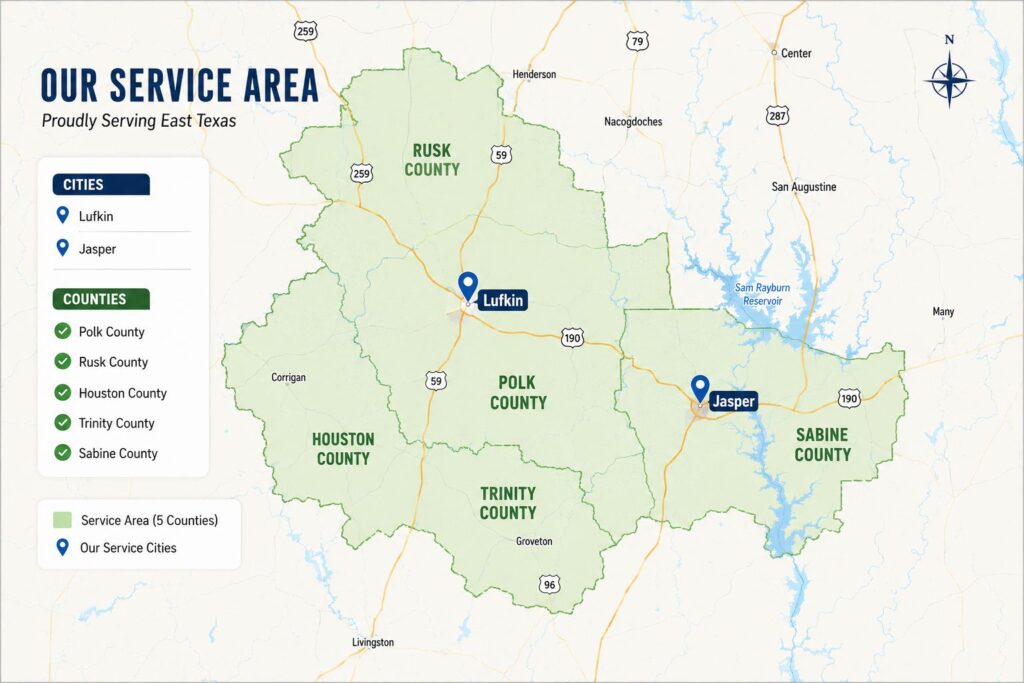
Elite Septic Service is a locally owned, licensed and insured contractor working across Lufkin, Jasper and the surrounding East Texas counties, with free estimates and flat-rate pricing agreed before work starts.

Questions worth asking before hiring anyone to dig
- Will you camera and locate the fault before excavating?
- Can I see the footage the recommendation is based on?
- Is a spot repair possible, or does the whole run need replacing?
- What pipe are you putting in, and to what fall?
- Who restores the ground, and what does that include?
- Does this work need county authorisation, and who files it?
- Are you licensed and insured for septic work in Texas?
We answer all seven before anyone commits to anything — and you should expect the same from every quote you get.
Warning Signs
Signs Your Sewer Line Needs Repair
These point at the pipe itself rather than at something that washed into it. One of them is worth a camera; several together usually means excavation.
The same blockage keeps returning
A line cleared two or three times that closes again at the same distance is not bad luck. Roots at a joint, a belly holding solids or a broken section is catching everything that passes, and clearing it only resets the clock.
Nothing will pass the line at all
A cable that stops dead at the same point, or a camera that cannot get past it, usually means a collapse or a fully crushed section. There is no cleaning solution to this one, and continuing to try costs money for nothing.
A wet or sour patch in the yard
Ground that stays damp, smells, or grows noticeably greener in a line between house and tank means effluent is escaping a broken joint. The soil underneath washes out over time, which is how a crack becomes a collapse.
Ground settling along the run
A depression or a soft strip forming above where the line runs is soil disappearing into a failed pipe. It tends to appear after heavy rain and it gets worse, not better, because the void underneath keeps growing.
Sewage odor outdoors
A sound line is sealed end to end. Persistent sewage smell along the run, near the tank or around a cleanout means gas is escaping somewhere it should not, which means the pipe or a seal has failed.
Mature trees over an older line
Pines and hardwoods over clay or Orangeburg pipe is the standard East Texas root story. If the line is old, the trees are big and the drains have started slowing, roots are the first thing to rule in rather than out.
Recent excavation near the line
Fence posts, driveways, tree removal, a new building. Drains that started misbehaving weeks after work on site usually have a damaged line, and the longer it runs that way the more soil washes out around the break.
Rodents or insects appearing indoors
A broken drain line underground is an open route into a building and a reliable water source. Rats and drain flies turning up with no obvious point of entry is a recognised symptom of a failed sewer line beneath a property.
An older property with original pipe
Clay, cast iron and Orangeburg all have finite lives, and plenty around Lufkin are past theirs. Knowing the condition before it fails turns an emergency excavation into a planned repair you chose the timing of.
Not sure whether you are looking at a repair, a blockage or a tank problem? A camera inspection answers it in under an hour, and a full septic inspection covers the rest of the system while we are there.
Where We Work
Sewer Line Repairs Across Lufkin and East Texas
Lines fail here for reasons particular to this part of Texas. Heavy clay soil swells when it is wet and shrinks when it dries, and that annual movement is what pulls joints apart and drops sections out of alignment. Long wet spells keep the ground working, and pine and hardwood roots head straight for the wettest thing on a property, which is the sewer line. On older Lufkin properties still running clay or Orangeburg pipe, those two forces together account for most of what we dig up.
Rural acreage adds its own problem. Lines laid decades ago were rarely documented, cleanouts have been buried or paved over, and nobody is certain where the run goes until we trace it. Locating is therefore part of the job rather than an extra, and we would rather spend an hour finding the line than a day looking for it. We repair and replace lines throughout:
Line repair is often one part of a bigger picture, and we handle the rest: septic tank repair, full system replacement, drain cleaning, scheduled maintenance, and 24/7 emergency septic service. See all of our septic services, or check the full East Texas service area if your property is not listed above.
More septic services in Lufkin, TX: septic tank installation, septic tank repair, septic tank inspection, septic system replacement, emergency septic service, septic system maintenance, drain cleaning and sewer camera inspection. See everything we offer locally on our septic service in Lufkin, TX page.
Sewer Line Repair FAQs
Common questions about sewer and septic line repair across Lufkin and East Texas. If yours is not here, call and ask.
How much does sewer line repair cost in Lufkin?
Can a broken sewer line be repaired without digging?
How do I know if I need a repair or just a cleaning?
Do I need a permit to repair a sewer line in Texas?
Will you have to dig up my whole yard?
Does homeowners insurance cover sewer line repair?
How long will the new line last?
Can you repair the line at the tank itself?
What happens to my lawn or driveway afterwards?
How do I get a sewer line repair quote in Lufkin?
Need a Sewer Line Repaired in Lufkin, TX?
Tell us the address, what the drains are doing and how many times the line has been cleared. We will put a camera down it, locate and mark the fault with a depth, show you the footage, and quote the repair it actually needs — spot repair where that is enough, replacement where it is not.
- Located and marked before anything is excavated
- Spot repair where a spot repair is genuinely enough
- Free estimates and flat-rate pricing agreed up front