Home / Blog / Septic Guides

Aerobic vs. Conventional Septic Systems: Which Is Right for Your Property?

August 5, 2026 · Damon Malnar · Septic Guides

If you are building on rural land in East Texas, or replacing a system that has failed, one of the first questions is whether the property gets a conventional septic system or an aerobic one. The two do the same job, treating household wastewater on your own land, but they do it in very different ways. They differ in upfront cost, running cost, maintenance obligations and the kind of land they suit.

Here is the part that surprises most people: you usually do not get to pick freely. In Texas, the soil and site conditions found during the site evaluation largely decide which systems are allowed. This guide explains how each system works, what decides between them, what each really costs over time, and what living with each one is like, so you understand the recommendation when it comes.

Aerobic vs. conventional at a glance

Conventional systemAerobic system (ATU)
How it treatsSettling in a tank, then filtering through soilAir pumped into the tank so oxygen-loving bacteria treat the wastewater, then disinfection
Moving partsNone in a gravity systemAir pump (aerator), effluent pump, timer, floats, alarm, chlorinator
ElectricityNot needed for gravity systemsNeeded around the clock
Where effluent goesUnderground trenches or bedsUsually spray heads on the surface; sometimes drip lines or a drain field
Soil it needsSoil that drains at a moderate rate with enough depth above groundwater and rockWorks on many sites where a conventional field cannot
Texas maintenancePump every 3 to 5 years; no contract requiredMaintenance contract with inspections every 4 months, at least for the first two years
Typical installed cost in TexasRoughly $6,300 to $10,000Roughly $10,000 to $20,000

The cost figures are ranges reported by Texas cost guides in 2026. Your actual price depends on the site, the soil, the size of the home and the permitting authority. Our article on septic system costs in East Texas breaks the budget down further.

How a conventional septic system works

A conventional system is simple. Wastewater from the house flows into a buried septic tank, usually concrete. Solids settle to the bottom as sludge, grease floats to the top as scum, and naturally occurring bacteria partially break down the waste without oxygen. The clarified liquid, called effluent, leaves the tank through an outlet baffle or filter and flows to the drain field.

The drain field is a series of trenches or a bed, filled with gravel, plastic leaching chambers or gravelless pipe. The effluent seeps out into the surrounding soil, and the soil finishes the treatment by filtering out bacteria and nutrients. In a gravity system, nothing needs power. Some sites use a pump tank to lift effluent to a field that sits higher than the tank, or a low-pressure dosing system that spreads it more evenly, but the principle is the same: the soil does the final treatment.

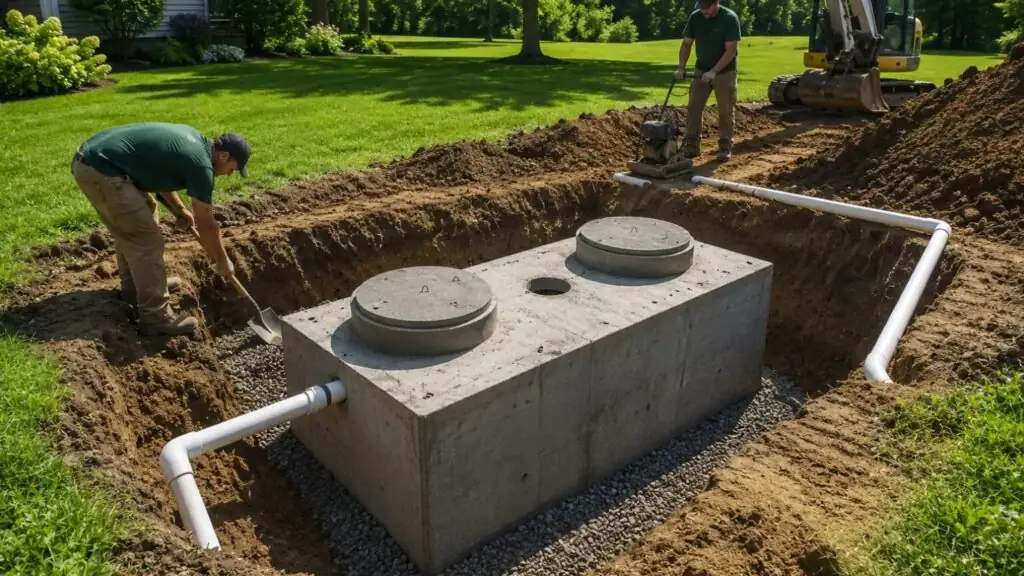
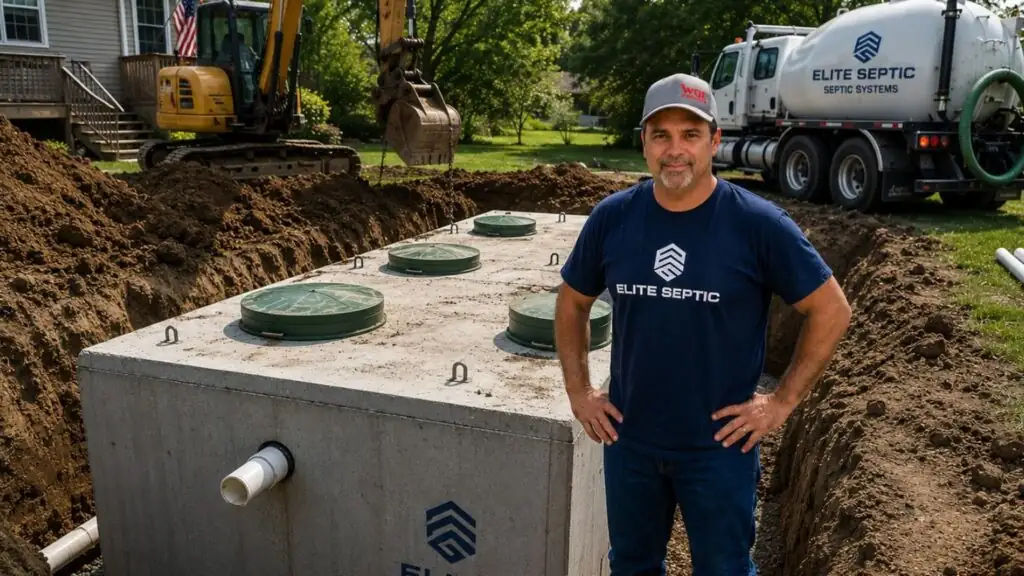
Septic tank and drainfield being installed on a rural East Texas property
A conventional system relies on the soil in the drain field to finish treatment.

How an aerobic septic system works

An aerobic treatment unit (ATU) works like a small version of a municipal treatment plant. Most residential units in Texas have several chambers:

  • Pretreatment (trash) tank or chamber: catches solids and material that will not break down, like a conventional septic tank.
  • Aeration chamber: an air pump pushes air into the wastewater around the clock. Aerobic bacteria, which need oxygen, break down waste much faster and more completely than the anaerobic bacteria in a conventional tank.
  • Clarifier: the treated water settles so remaining solids can return to the aeration chamber.
  • Pump tank with disinfection: the clear effluent passes a chlorinator (or UV unit) and collects in a pump tank.

From there, most East Texas systems spray the treated, disinfected water across a designated area of lawn through sprinkler heads, usually on a timer set for late at night or early in the morning. Others use drip irrigation lines or a smaller drain field. Because the effluent is treated to a much higher standard before it reaches the soil, an aerobic system can work on land that could never support a conventional field.

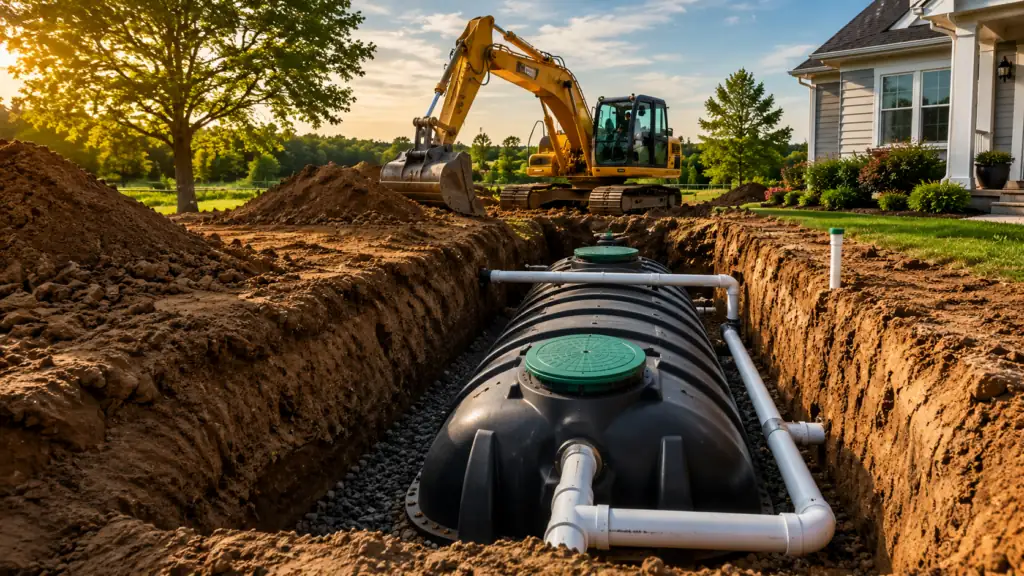
Comparison of aerobic and conventional septic system installation
Aerobic units add aeration, clarification and disinfection before the water reaches the soil.

Which system does your property need?

In Texas, the answer comes from a site evaluation performed by a TCEQ-licensed site evaluator before the system is designed. They dig test pits or borings, classify the soil and look for water and rock. Under the state criteria for standard subsurface drain fields, a conventional field is generally unsuitable when:

  • The soil along the trench or within two feet below it is heavy clay (TCEQ soil Class IV) or very coarse sand and gravel (Class Ia), with limited exceptions.
  • There are signs of seasonal groundwater within 24 inches of the bottom of the trench.
  • A restrictive layer, such as dense clay or rock, is within 24 inches of the bottom of the trench.
  • The slope is greater than 30 percent or the site is in a flood-prone area without special design.

Lot size and setbacks matter too. A conventional field on tight soil needs a lot of area; on clay loam (Class III) a three-bedroom home needs roughly twice the absorptive area it would need on sandy loam. On a small lot, a lake lot or a lot crowded by wells and property lines, the space may simply not exist.

That is why aerobic systems are so common across East Texas. Much of the region has clay subsoils and high winter water tables, and many lake properties around Sam Rayburn, Toledo Bend and Lake Livingston have small lots and strict setbacks. Where the soil is deep, well drained and there is room, a conventional system is usually the simpler and cheaper choice. Our guide to septic permits in Angelina County explains the evaluation and design steps.

Cost comparison: installation and ownership

The purchase price is only part of the story. An aerobic system costs more to install and more to run every year.

Cost itemConventionalAerobic
Installation (Texas, 2026 guides)About $6,300 to $10,000About $10,000 to $20,000
Maintenance contractOptionalRequired; commonly about $300 to $500 a year
ElectricityNone for gravity systemsCommonly about $100 to $300 a year
Disinfection suppliesNoneChlorine tablets refilled regularly
PumpingEvery 3 to 5 yearsAs measured by the maintenance provider
Parts that wear outFew (baffles, filter, lids)Air pump, effluent pump, timer, floats, spray heads over time

Texas cost guides estimate that over ten years an aerobic system can cost several thousand dollars more to own than a conventional one. That extra cost buys you a working, legal system on land where a conventional system would not be permitted, so in many cases it is not really a choice.

Maintenance: what Texas requires

Conventional systems

There is no statewide maintenance contract requirement for a conventional system. TCEQ and the EPA recommend pumping the tank every three to five years and having the system inspected regularly. Our guide on how often to pump a septic tank shows how to set your own schedule.

Aerobic systems

Aerobic systems must be maintained by a licensed maintenance provider under a contract, with an inspection every four months. In Angelina County, the Angelina & Neches River Authority requires the contract for at least the first two years; after that, an eligible single-family owner may maintain the system personally but must do the inspections and file the reports. Each visit checks the aerator, pumps, floats, alarm, spray heads and disinfection, and the provider reports to the permitting authority.

Owners also have a job: keeping the chlorinator stocked. TCEQ notes that chlorine tablets for wastewater disinfection should be calcium hypochlorite tablets certified for that use. Swimming pool tablets are a different chemical and are not a substitute. See our septic maintenance service for what we check on each visit.

Pros and cons of each system

Conventional: pros

  • Lower installation cost where the site allows it.
  • No electricity and few moving parts in a gravity system.
  • Low running costs and no required contract.
  • Nothing sprayed on the surface of the yard.

Conventional: cons

  • Needs suitable soil, depth to groundwater and enough area.
  • Not permitted on many East Texas clay and high-water-table sites.
  • A failed drain field is expensive to replace.

Aerobic: pros

  • Works on sites where a conventional system cannot be permitted.
  • Produces much cleaner effluent, which is better for nearby wells and water.
  • Needs less disposal area, useful on smaller lots.

Aerobic: cons

  • Higher installation cost.
  • Ongoing costs for the contract, electricity and chlorine.
  • Mechanical parts that need repair or replacement over time.
  • Spray areas have setbacks and should be kept clear when the system runs.

Living with an aerobic system

An aerobic system is reliable if you respect a few rules. Never switch off the air pump to save power; without air, the system turns anaerobic, starts to smell and stops treating properly. Keep the chlorinator stocked. Do not let children play in the spray area while it is running, and do not plant a vegetable garden there. Keep the alarm panel powered, and call your provider if it lights up rather than silencing it. After a power outage, check that the aerator and timer are running again.

Everything that is bad for a conventional system is bad for an aerobic one too. Grease, wipes, harsh chemicals and large volumes of water all cause problems. Our list of what not to flush applies to both.

Common problems with each system

Conventional systems

Most conventional problems start in the tank and end in the drain field. A tank that goes too long without pumping lets solids escape into the trenches. A broken or missing outlet baffle does the same. Roots find their way into pipe joints, vehicles crush lines and compact the soil, and a high winter water table can leave the trenches saturated. The typical symptoms are slow drains throughout the house, wet ground over the field and odors outdoors. Many of these are preventable with regular pumping and by keeping traffic and trees off the field. Our guide on why drain fields fail covers the fixes.

Aerobic systems

Aerobic problems are more often mechanical. The air pump wears out or its filter clogs, which lets the system turn septic and start to smell. The effluent pump or its float fails, which triggers the high-water alarm. The chlorinator runs empty, or the wrong tablets are used. Spray heads clog or get knocked out of alignment by mowers, and timers reset after a power outage. The good news is that these parts are designed to be serviced, and the four-monthly inspections are meant to catch them before they cause a backup. Fast septic repair usually means replacing a component, not the whole system.

Can you switch from one to the other?

Switching from conventional to aerobic is common when an old drain field fails and the site no longer meets the rules for a new conventional field. The existing tank can sometimes be reused as a trash tank ahead of the new unit, depending on its condition and the design. Switching from aerobic to conventional is rare, because the soil conditions that required aerobic treatment usually have not changed. Either way, the change needs a site evaluation, a new design and a permit. See septic system replacement for how we handle conversions.

Frequently asked questions

It treats wastewater to a higher standard, but better depends on the site. Where the soil supports a conventional system, it is usually the simpler and cheaper option to own. Where it does not, aerobic is the right tool.

A properly working, maintained aerobic system should have little odor. A sewage smell from the spray heads usually means the aerator has failed or the chlorinator is empty.

Not everywhere, but they are required on many properties because of clay soils, high water tables and small lots. The site evaluation decides for each property.

Both types can serve for decades with good maintenance. Tanks and soil can last a long time; aerobic mechanical parts such as air pumps and effluent pumps wear out and are replaced along the way.

In Angelina County, an eligible single-family homeowner can take over maintenance after the first two years under contract, but must perform the required inspections and send reports to the Angelina & Neches River Authority. Some permitting authorities require training or do not allow homeowner maintenance at all. Most owners find a contract with a licensed provider simpler and safer.

Not sure which system your land needs? Elite Septic Service arranges the site evaluation, explains the options that are actually permitted on your property, and installs and maintains both conventional and aerobic systems across Lufkin, Jasper and East Texas. Request a free estimate or read about septic tank installation.

Need help with your septic system?

Damon Malnar, owner and founder of Elite Septic Service in Lufkin, Texas

Written by

Damon Malnar

Owner & Founder, Elite Septic Service

10 years installing, repairing, and inspecting septic systems across Lufkin, Jasper, and the surrounding East Texas counties.

TCEQ licenses

  • Installer, Class II
  • Site Evaluator
  • Maintenance Provider

More about Damon

Need service now?

Call for fast scheduling across East Texas.

Related Articles

Septic System Costs in East Texas: What Actually Drives the Price

Septic System Costs in East Texas: What Actually Drives the Price

Typical 2026 price ranges for conventional and aerobic systems in Texas, the site factors that push cost up or down, yearly running costs and how to compare quotes fairly.
What Size Septic Tank Do I Need? A Texas Sizing Guide

What Size Septic Tank Do I Need? A Texas Sizing Guide

Texas septic tank sizing explained: design flow by bedrooms and square footage, the minimum tank formulas, aerobic unit sizes and the planning mistakes to avoid.
Why Drain Fields Fail, and Whether Yours Can Be Saved

Why Drain Fields Fail, and Whether Yours Can Be Saved

What actually causes drain field failure, how to tell if yours is recoverable, and the repair options that work on East Texas soil.