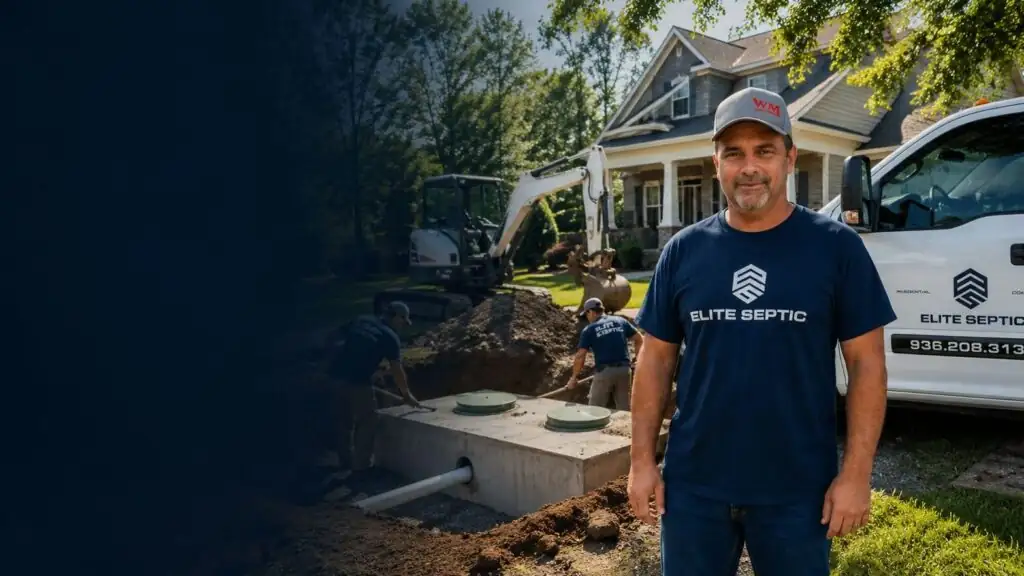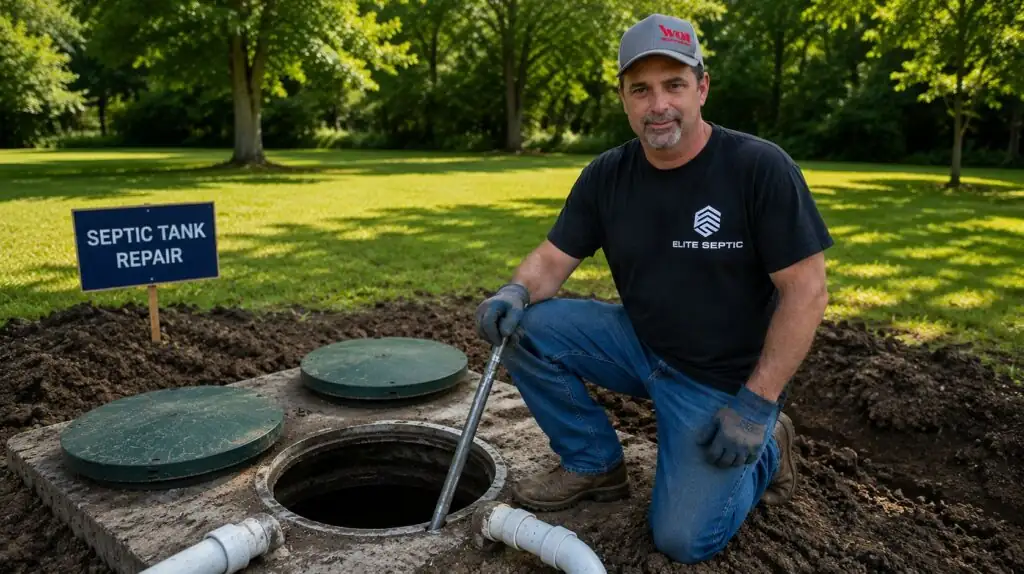
Septic System Costs in East Texas: What Actually Drives the Price
Typical 2026 price ranges for conventional and aerobic systems in Texas, the site factors that push cost up or down, yearly running costs and how to compare quotes fairly.
August 26, 2026 · Damon Malnar · Maintenance Tips
In this article
“Every three to five years” is the answer most people hear, and it is a reasonable starting point. It is also a range wide enough to be misleading. A retired couple with a 1,500-gallon tank and a family of six with a 750-gallon tank live in completely different septic realities, and pumping on the wrong schedule costs money either way: too often and you pay for service you did not need, too rarely and solids escape into the drain field, which is the expensive part of the system.
This guide explains how often to pump a septic tank based on what actually fills it, gives you a schedule by tank size and household size, covers the signs you have already waited too long, and answers the questions we hear most from homeowners in Lufkin, Jasper and across East Texas.
Both the U.S. EPA and the Texas Commission on Environmental Quality (TCEQ) recommend pumping a typical household septic tank every three to five years. The EPA also recommends having the system inspected by a professional at least every three years, and more often (generally once a year) for systems with pumps, float switches or other mechanical parts.
Where your home falls in that range depends on four things: the size of the tank, the number of people living in the house, how much water the household uses, and how many solids go down the drains. Those four factors are why two neighbors with identical houses can need very different schedules.
A septic tank works by giving wastewater time to separate. Heavy solids sink and form a sludge layer on the bottom. Grease, oils and light material float and form a scum layer on top. The relatively clear liquid in between flows out to the drain field. Bacteria in the tank break down part of the sludge, but not all of it, so the sludge and scum layers grow a little every day.
As those layers thicken, the clear zone in the middle shrinks. Wastewater spends less time in the tank, separation gets worse, and eventually solids start leaving with the effluent. Pumping removes the accumulated sludge and scum and restores the full working volume of the tank.
The most widely used planning table comes from Penn State Extension. It estimates the years between pump-outs for year-round occupancy, based on tank size and the number of people in the home. Treat these as planning estimates, not guarantees, since water habits vary a lot from one household to the next.
| Tank size | 1 person | 2 people | 3 people | 4 people | 5 people | 6 people |
|---|---|---|---|---|---|---|
| 750 gallons | 9.1 yrs | 4.2 yrs | 2.6 yrs | 1.8 yrs | 1.3 yrs | 1.0 yrs |
| 1,000 gallons | 12.4 yrs | 5.9 yrs | 3.7 yrs | 2.6 yrs | 2.0 yrs | 1.5 yrs |
| 1,250 gallons | 15.6 yrs | 7.5 yrs | 4.8 yrs | 3.4 yrs | 2.6 yrs | 2.0 yrs |
| 1,500 gallons | 18.9 yrs | 9.1 yrs | 5.9 yrs | 4.2 yrs | 3.3 yrs | 2.6 yrs |
Two things jump out. First, household size matters more than almost anything else: a 1,000-gallon tank goes from roughly six years with two people to about two and a half years with four. Second, a lot of East Texas homes are near the minimum. Under Texas rules a home with a design flow of 250 gallons per day or less needs only a 750-gallon tank, so a three-bedroom house built with water-saving fixtures may have a smaller tank than its owners assume. Our Texas septic tank sizing guide explains how tank size is set.
Tables are for planning. The real answer comes from measuring what is in your tank. During an inspection, a technician measures the thickness of the sludge and scum layers with a sludge judge or similar tool. The EPA gives a clear rule: the tank needs to be pumped if the bottom of the scum layer is within 6 inches of the bottom of the outlet, or if the top of the sludge layer is within 12 inches of the outlet.
Write those measurements down each time. After two or three visits you will know exactly how fast your household fills the tank, and you can set a schedule that fits your home instead of an average.
You do not need to guess. Six steps will give you a schedule that fits your household instead of an average one:
After two or three cycles, your schedule is based on how your household actually uses the system, which is far more reliable than any rule of thumb.
Every person adds solids and water. Count everyone who lives in the house full time, and remember that regular overnight guests, holiday crowds or a home day care all count too.
A garbage disposal sends ground food into the tank, and food solids break down more slowly than human waste. Extension services commonly advise pumping noticeably more often if you use one regularly. If you are building new and plan to use a disposal, tell your designer, since many recommend a larger tank to allow for the extra solids. Scraping plates into the trash or a compost bin is one of the easiest ways to lengthen your pumping interval.
Water does not fill the tank with solids, but it does push wastewater through faster, which gives solids less time to settle and sends more of them toward the drain field. The EPA puts average indoor use at nearly 70 gallons per person per day and notes that one running toilet can waste up to 200 gallons a day. Fixing leaks and spreading laundry across the week protect both the tank and the field.
Wipes, paper towels, feminine products, cigarette butts, cooking grease and coffee grounds do not break down in a septic tank. They add directly to the sludge and scum that have to be pumped out. Our guide to what not to flush has the full list.
Many East Texas homes run aerobic treatment units instead of conventional systems. These still collect solids in a pretreatment (trash) tank and in the treatment chambers, and they still need pumping. On an aerobic system, your licensed maintenance provider checks sludge levels during the required inspections, which in Texas happen every four months under a maintenance contract, and will tell you when pumping is due. Our comparison of aerobic and conventional systems explains how they differ.
If you notice any of these, do not wait for your scheduled date:
These are also the classic warning signs of a failing septic system, and the earlier they are addressed, the more likely it is that pumping and a small repair will be enough.
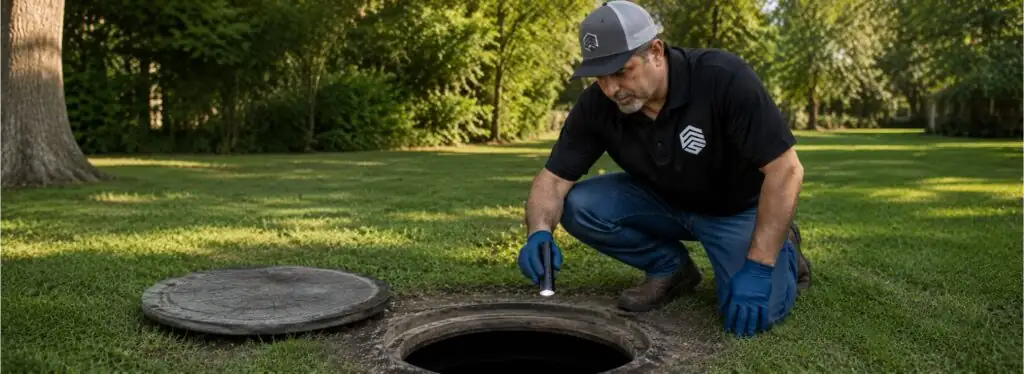
A proper service visit is more than emptying the tank. The technician locates and uncovers the lids, measures the sludge and scum, pumps out the tank completely through the main access (not just the small inspection port), and checks the inlet and outlet baffles, the effluent filter if there is one, and the condition of the tank walls and lid. In Texas, the waste must be hauled by a TCEQ-registered sludge transporter and taken to an approved disposal facility.
Ask for a written report that records the date, the gallons removed, the sludge and scum measurements and any problems found. That record is useful for your next service, and very useful when you sell the house.
Recent Texas cost guides put a routine residential pump-out in the range of a few hundred dollars, commonly around $250 to $400, with higher prices for large tanks, hard-to-reach lids, long travel distances or emergency calls. Compare that with the cost of replacing a drain field, which in Texas generally runs into the thousands of dollars and requires a permit, and routine pumping is one of the best-value maintenance jobs on any property. Our article on septic system costs in East Texas covers the bigger numbers.
Around Sam Rayburn, Toledo Bend and Lake Livingston, many septic systems serve weekend homes, camps and rentals. A tank used part of the year fills more slowly, so the interval from the table can be stretched in proportion to occupancy. A 1,000-gallon tank used by four people half the year behaves more like a tank used by two people full time.
Rentals are the exception. Short-term guests often do not know the house is on septic and flush things that regular owners never would, and a full house every weekend can load the system like a large family. If you rent your lake house, plan for more frequent inspections and post a simple “septic system: toilet paper only” sign in the bathrooms.
Bacteria and enzyme additives do not replace pumping. A healthy tank gets all the bacteria it needs from normal household waste, and no additive removes the inorganic solids that build up over time.
By the time a tank causes a backup, solids have often been escaping into the drain field for a while. Pumping on schedule is what prevents that damage.
Pumping relieves the pressure and stops more solids reaching the field, so it is usually the right first step. But if the field itself is clogged or saturated, it needs its own diagnosis. Our guide on why drain fields fail explains the options.
For a conventional system there is no statewide fixed pumping interval; TCEQ recommends every three to five years. Aerobic systems are different. They must be covered by a maintenance contract with a licensed provider, with inspections every four months, at least for the first two years and, depending on the permitting authority, for the life of the system. Your provider will call for pumping when the measurements show it is needed.
Pumping more often than needed does not damage a tank, but it wastes money. The bacteria that remain on the tank walls and in the residual liquid re-establish quickly. Measuring sludge levels is the best way to avoid pumping early.
Pumping is a good idea around a sale, but pumping alone is not an inspection. A buyer should ask for an inspection with the tank pumped so the technician can see the baffles and walls. See our guide to septic inspections before buying a home.
Avoid pumping a tank when the ground around it is saturated, especially a plastic or fiberglass tank, because high groundwater can push an empty tank upward. After flooding, have the system checked before resuming normal use.
Start with the permit records. In Angelina County, the Angelina & Neches River Authority keeps records for permitted systems, which often include a site drawing. Otherwise, a technician can locate the tank by following the sewer line from the house.
Not sure when your tank was last pumped, or how full it is now? Elite Septic Service inspects septic tanks across Lufkin, Jasper and East Texas, measures what is actually in the tank, and gives you a written report and a schedule that fits your household. Book an inspection, or see our septic maintenance plans and septic inspection service.

Written by
Owner & Founder, Elite Septic Service
10 years installing, repairing, and inspecting septic systems across Lufkin, Jasper, and the surrounding East Texas counties.
TCEQ licenses
Typical 2026 price ranges for conventional and aerobic systems in Texas, the site factors that push cost up or down, yearly running costs and how to compare quotes fairly.

Slow drains, gurgling, odors, soggy ground and backups: what each warning sign means, how urgent it is, and what to do right away.
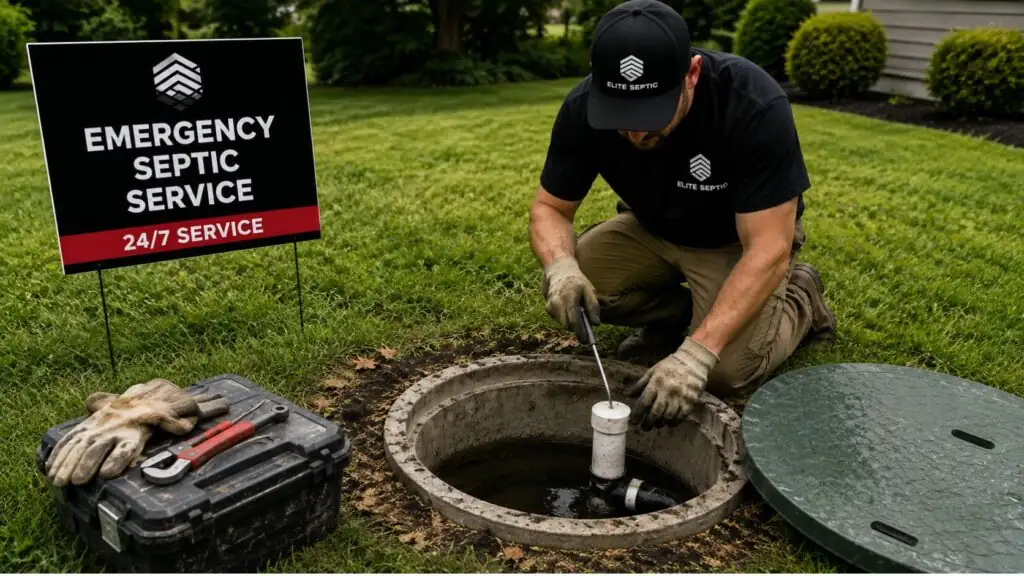
The items that damage septic tanks and drain fields most, why "flushable" wipes are not septic-safe, and the simple habits that add years to a system.