
Septic System Costs in East Texas: What Actually Drives the Price
Typical 2026 price ranges for conventional and aerobic systems in Texas, the site factors that push cost up or down, yearly running costs and how to compare quotes fairly.

August 19, 2026 · Damon Malnar · Homeowner FAQs
In this article
Septic systems almost never fail without warning. In most cases the system has been sending signals for weeks or months: a drain that is a little slower than it used to be, a smell on humid evenings, a patch of grass that stays green in August. The homeowners who end up with the biggest repair bills are usually the ones who noticed something and hoped it would go away.
This guide walks through the nine most common signs of septic system failure, explains what each one usually means, and tells you how urgent it is. It also covers the extra warning signs specific to aerobic systems, which are common across East Texas, what to do the moment you notice a problem, and how a professional tracks down the cause.
A septic system has two main parts. The tank separates solids from liquid, and the drain field (or, on an aerobic system, the spray or drip area) disposes of the treated liquid. Problems in the tank are usually cheap to fix: pumping, a new baffle, a cleaned filter. Problems in the drain field are expensive, and they are very often caused by tank problems that were left alone. Acting on the first signs is how a few-hundred-dollar service call stays a few-hundred-dollar service call.
Failures also matter beyond your own property. Untreated sewage carries bacteria and viruses, and near a private well, a creek or one of the big East Texas lakes it can contaminate water that other people use.
One slow sink is usually a clog in that sink’s drain line. When the tubs, showers, sinks and toilets are all slow at once, the problem is further down the line: a blocked main sewer line, a tank that is too full, or a drain field that can no longer accept water. This is often the earliest sign, and it is the easiest to ignore.
Gurgling happens when water is struggling to get past a restriction and air is being pulled through the traps. If flushing a toilet makes the tub gurgle, or running the washing machine makes a toilet bubble, the system is not draining freely. It can also point to a blocked plumbing vent, which is a cheaper fix, so it is worth having checked.
A healthy septic system should not smell. Odors near the tank lid can mean a cracked or loose lid, or a tank that is overfull. Odors over the drain field usually mean effluent is reaching the surface. Odors inside the house can come from dry traps in rarely used drains, a failed wax ring, or gases pushing back through the plumbing because the system is backing up. Sewer gas contains hydrogen sulfide and methane, so persistent indoor odors should be investigated promptly.
This is the sign nobody misses. Backups usually appear first in the lowest fixture in the house, which is often a shower, tub or floor drain. A backup means wastewater has nowhere to go, and it is an urgent problem. Stop using water, keep people and pets away from the affected area, and call for emergency septic service.
Wet, spongy soil or pooling water over the drain field when it has not rained means effluent is coming to the surface instead of soaking into the soil. That is the defining symptom of a drain field that is failing or badly overloaded. It is also a health hazard, especially where children or pets play. Our guide on why drain fields fail explains the causes and whether a field can be saved.
A stripe of dark green grass that grows faster than the rest of the lawn, especially during a dry East Texas summer, means the grass is being fed by effluent close to the surface. A little extra growth right over trenches can be normal. A strong, persistent pattern, especially with damp soil, is not.
Septic effluent is rich in nitrogen and phosphorus. When a system is leaking into nearby water, it can feed algae blooms along the shoreline closest to the system. On lake lots around Sam Rayburn and Toledo Bend, this is one of the signs permitting authorities watch for.
If you have a private well, a water test showing nitrates or coliform bacteria can point to a septic system problem nearby, whether yours or a neighbor’s. Texas rules require substantial separation between septic components and private wells (for example, 50 feet from a tank and 100 feet from a standard drain field), but older systems do not always meet today’s distances.
A soft spot, sinking soil or a depression over the tank or lines can mean a collapsing tank, a broken pipe or soil washing into a crack. This is a safety issue as well as a septic one: an old tank with a deteriorated lid can give way under a person’s weight. Keep everyone off the area and have it inspected.
Aerobic treatment units have mechanical and electrical parts, so they have their own set of warnings:
Texas requires aerobic systems to be inspected every four months under a maintenance contract, which is designed to catch these problems early. If your contract has lapsed, renewing it is the first step. Our septic maintenance service covers aerobic systems across East Texas.
| What you notice | Likely cause | How urgent |
|---|---|---|
| One slow drain | Local clog in that fixture’s line | Low. Try a plunger or have the line cleared. |
| All drains slow, gurgling | Full tank, blocked main line or struggling field | Moderate. Book an inspection within days. |
| Odor near the tank lid | Loose or cracked lid, full tank | Moderate. Check the lid is secure and have it looked at. |
| Wet ground or odor over the field | Drain field overloaded or failing | High. Cut water use and call promptly. |
| Aerobic alarm on | High water level or failed aerator | High. Call your maintenance provider the same day. |
| Sewage backing up indoors | System cannot drain at all | Urgent. Stop using water and call for emergency help. |
| Sinking ground over the tank | Possible tank collapse | Urgent. Keep everyone away from the area. |
Most failures trace back to a short list of causes: a tank that has not been pumped in years, too much water going into the system, things going down the drains that do not belong there, roots, vehicles driving over the drain field, and soil or groundwater conditions that were never right for the type of system installed. Age plays a part too. Even a well-kept system eventually reaches the end of its design life.
In East Texas, soil is a big factor. Heavy clay drains slowly and seasonal water tables rise in wet winters, which is why many properties here need aerobic systems rather than conventional trenches. You can read more in our guides to how often to pump a septic tank and what not to flush.
A good septic technician works from the house outward. They check whether the problem is in the plumbing or the septic system, look at the tank’s liquid level, measure sludge and scum, inspect the inlet and outlet baffles and the effluent filter, and probe the drain field to see whether effluent is ponding in the trenches. On aerobic systems they also test the aerator, pumps, floats, alarm and chlorinator. Where a line problem is suspected, a sewer camera inspection shows exactly where the blockage or break is.
Not every drain problem in a septic home is a septic problem, and knowing the difference can save you a service call. A few quick checks point you in the right direction:
If you are not sure, a technician can tell the difference quickly by checking the liquid level in the tank. A tank at its normal level with a backup in the house means the blockage is between the house and the tank. A tank running high means the problem is at or beyond the tank. Where the main line itself is the issue, drain cleaning or sewer line repair is usually the answer rather than work on the tank.
Many problems are repairable: pumping an overfull tank, replacing a broken baffle or lid, clearing a blocked line, fixing a failed pump or aerator, or resting an overloaded field. Replacement becomes the answer when the drain field soil is clogged or compacted, the tank itself is failing, or the site needs a different kind of system to meet current rules. In Texas, replacing or significantly altering a system requires a permit, a site evaluation and a licensed installer. See septic repair and septic system replacement for how we handle each.
It can seem sudden, but there are usually earlier signs. The exception is physical damage, such as a crushed line from a vehicle or a collapsed tank, which can cause an abrupt failure.
Heavy or prolonged rain can saturate the soil around a drain field so it cannot accept effluent. Slow drains or wet spots that show up only after rain and clear up afterward suggest a system that is on the edge, often because of a high seasonal water table.
Keep water use to an absolute minimum until the cause is found. Every flush adds to the backup.
It depends on the policy and the cause. Many policies exclude failures from wear, age or lack of maintenance but may cover sudden accidental damage. Check your policy and keep maintenance records, which help in any claim.
Noticed one of these warning signs? Elite Septic Service diagnoses septic problems across Lufkin, Jasper and East Texas, explains what is actually wrong, and gives you a flat-rate price before any work starts. For backups and alarms, call our emergency line 24/7; for everything else, request an inspection or read about our septic inspection service.

Written by
Owner & Founder, Elite Septic Service
10 years installing, repairing, and inspecting septic systems across Lufkin, Jasper, and the surrounding East Texas counties.
TCEQ licenses
Typical 2026 price ranges for conventional and aerobic systems in Texas, the site factors that push cost up or down, yearly running costs and how to compare quotes fairly.
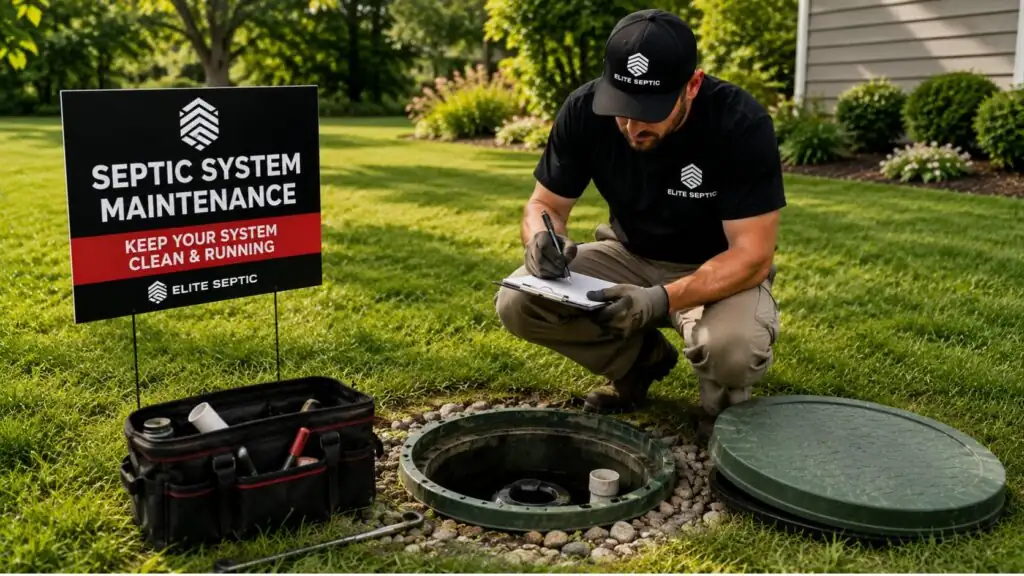
A practical pumping schedule by tank size and household size, the measurements that tell you it is time, and the habits that stretch the interval.
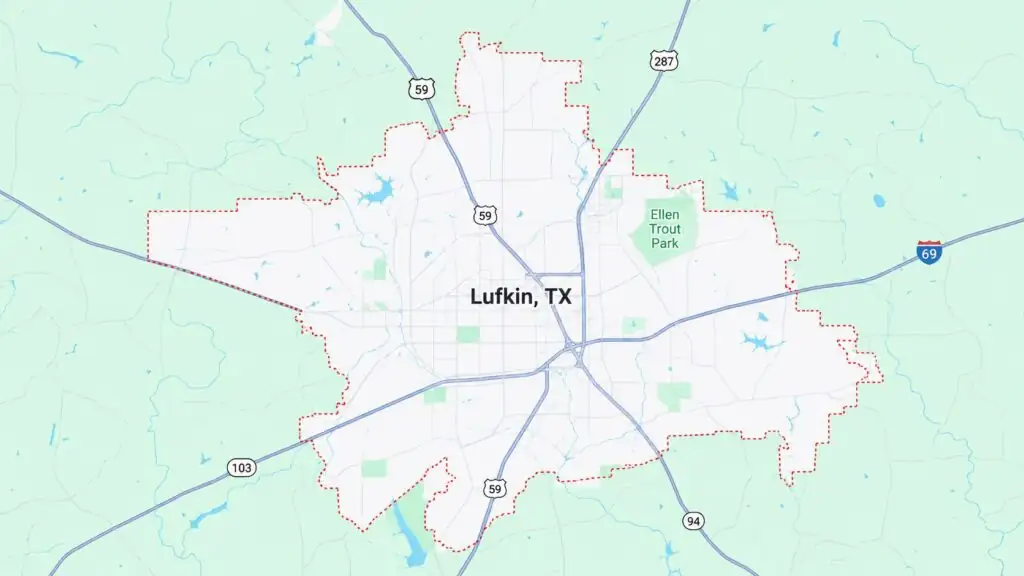
Who issues septic permits in Angelina County, every step from site evaluation to License to Operate, and what changes when a property is sold.